


Detroit is often called the city of God, a label that is used to describe the Black religious tradition of this city.
Steeped in the historical fight for social and economic justice for African Americans, Detroit’s Black church wielded the same power that the Abuna (Bishop) of Ethiopia once had.
Back then the Abuna had to officially consecrate every king that was installed in that North African country, the only nation that successfully fought to remain un-colonized on the continent of Africa.
So like the Abunas of Ethiopia, we saw the power of Detroit’s religious leaders come to bear in the bitter 2005 mayoral election that almost landed candidate Freman Hendrix on the 11th floor of the Coleman Young Municipal Center, until incumbent Kwame Kilpatrick came out in a radio commercial to declare that Detroit is a city of God.
Like a religious edict, Kilpatrick’s declaration had a rapid-fire effect. It rallied most of the city’s church leadership behind him that was once so divided over his candidacy.
His mistakes during his first term in office were overlooked because the majority of the church leadership in this city stood behind him on the grounds of redemption, a pillar of the Christian faith.
Looking back, it appears that Kilpatrick was clever enough to use the Jesus factor and played to the sensibilities of the faith community. So he was reelected in part because the Sunday morning pulpits were beating the drums for his reelection.
And so in 2010, Detroit finds itself again with a powerful reminder of how significant the Black church is.
This time around, that reminder is not playing out in another bitter reelection battle over who becomes the next mayor. It is not the fight to stop the proliferation of liquor stores in Detroit, unlike any other place in Michigan, sometimes almost becoming a one-stop shop for drug pushers.
Rather, it is the fight to control activities that take place inside strip clubs where women dance nearly naked as male patrons shower them with dollar bills. Obviously, the goal is that if those titillating activities inside the strip clubs are curtailed, including banning VIP rooms where dancers give their male patrons lap dances, serving alcohol, etc., it could discourage the proliferation of such exotic clubs in Detroit.
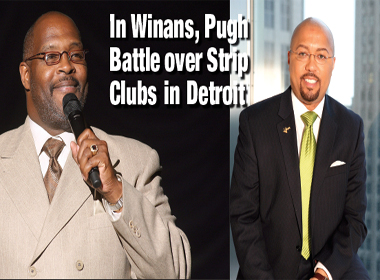
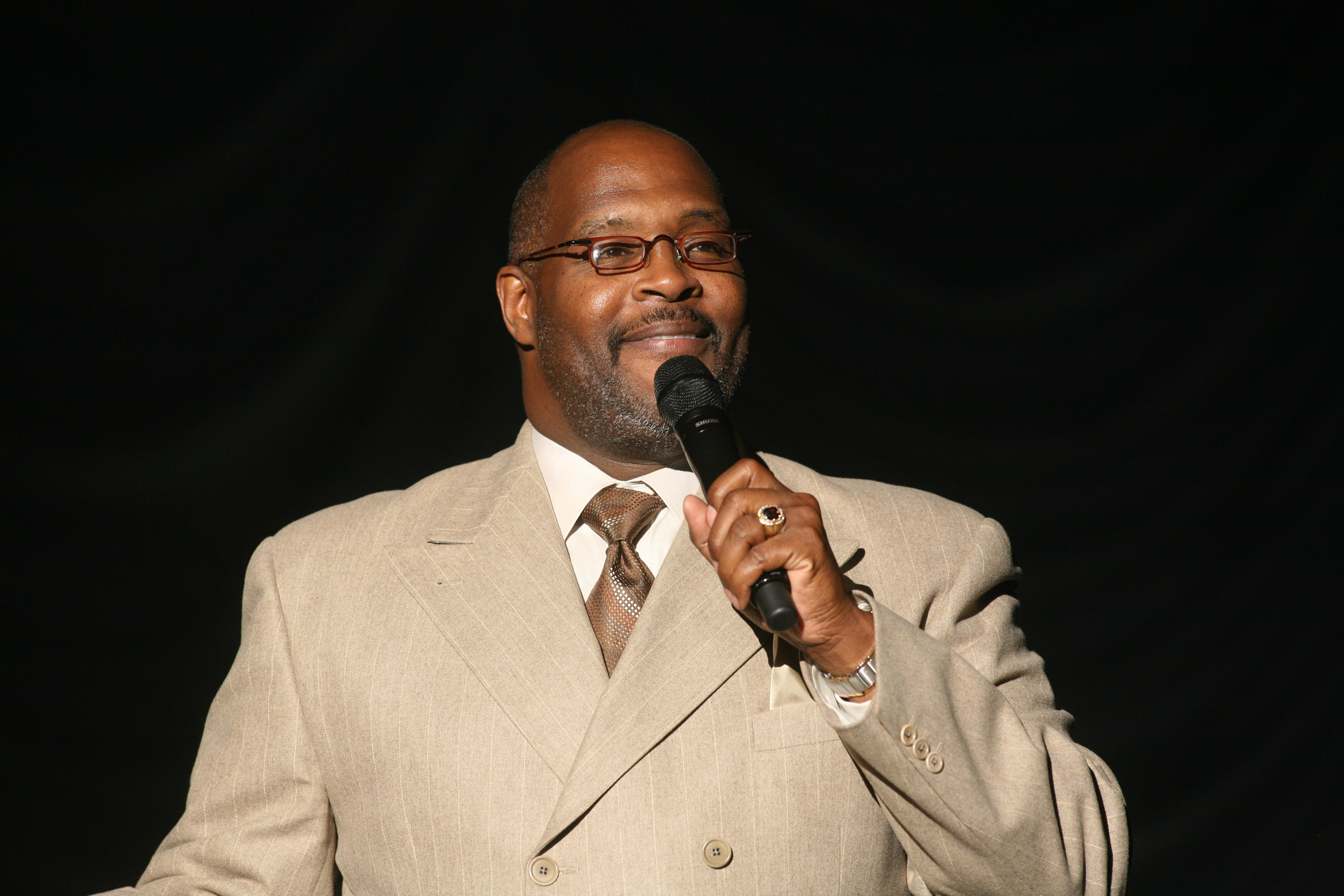
Leading the moral crusade against these strip clubs and their overwhelming presence in the city is the Rev. Marvin Winans of Perfecting Church. The campaign is a resurgence of the place that Black churches occupy in this city’s ever-evolving future.
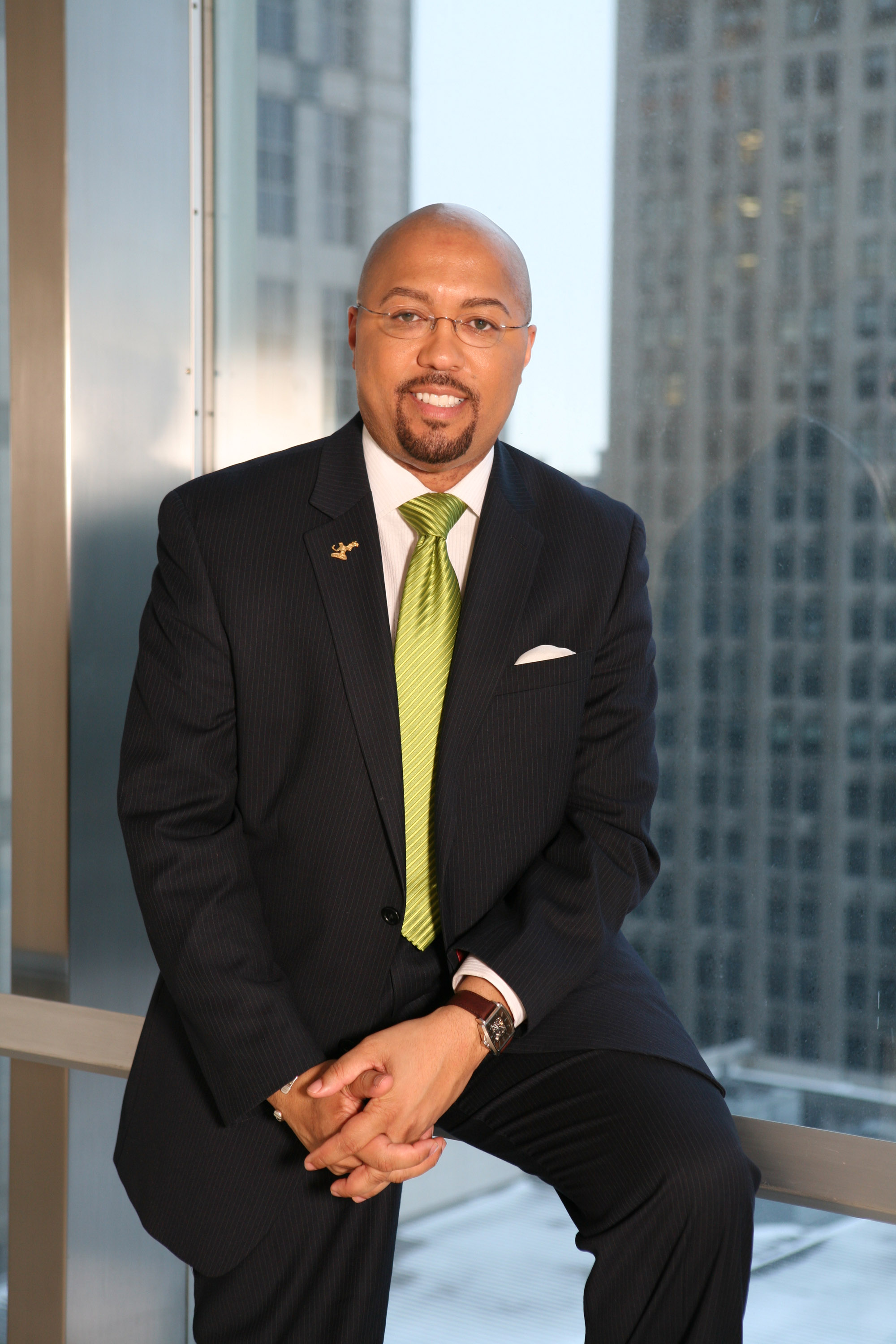
As I watched Winans take on Detroit City Council President Charles Pugh at a council session, it was like seeing Goliath go against David (except in this instance the roles are reversed because David may not be able to defeat Goliath).
Winans knew that he was acting in the large religious tradition of the church battling with the power of political expediency in Detroit. The church always had a voice even if that voice has waned in recent times.
While it is plausible to believe that he is not speaking for all of his congregation, Winans has thrust himself to the center of an emotional issue that has serious economic implications for those who are supportive as well as against strip clubs.
I am not a moralist and I strongly do not believe in legislating morality. A South African minister, Rev. Elijah Maswanganyi, once told me in an interview that although apartheid in South Africa may have ended through constitutional means, it can still remain in the hearts and minds of the people.

So while strip clubs might impede on the moral fabric of Detroit that religious leaders like Winans are touting, saying it sets bad examples for children, it will not stop Detroit patrons from traveling to other places in search of their sexual fantasies.
More importantly, Detroit is not a theocratic state, a crucial distinction that we need to remind ourselves of.
Detroit is not governed by the church, but by the City Charter that the electorate approved. Faith is a personal relationship that must not be mixed with politics. But because of the history of slavery and how the early church used Christianity to justify slavery and oppression of African Americans in this country for so long, all which helped to codify the protest notion of Black theology, it is always difficult to separate religion from politics.
Yet we cannot impose on everyone in the city our Judeo- Christian traditions and Black theological principles. While those religious injunctions are significant because they helped to form, in part, the bedrock for African-American survival today, not everyone subscribes to those beliefs.
Hence Charles Pugh’s argument, that strip clubs are businesses that must be allowed to operate without any stringent restrictions that could hamper those businesses, is valid for many reasons.
The reality is that those businesses hire African Americans. This was evidenced at the Monday night public hearing before the City Council, where we saw the demographic of some of the dancers: Black single mothers who are stripping to take care of their children. Others are students who have no means of obtaining an income to meet their academic fees other than to strip.
While some of us are getting emotionally entangled, moralistically beating our chests, have we considered the economic impact forcing strip clubs out of business will have on those single mothers and their children? That means adding still more people to the unemployment lines in Detroit and bolstering the crime syndicate.
One of the young women, Ashley Dunn, 26, at the hearing reminded council that to impose the tough rules on the strip clubs would be tantamount to removing food from her table.
Dunn is speaking for many young women whose economic conditions are so dire that they have been relegated to working as strippers, which is still better than carjacking our senior citizens at gunpoint, robbing and generally terrorizing the city. So her voice should not be drowned out in this debate because she represents the many invisible faces who may not come out because of the scorn and stigma attached to this kind of business.
At the same time we cannot dismiss the tears of 59-year-old Betty Little, who lost her nephew in a strip club where he worked as a bouncer. Her testimony is a challenge to the faith community to step up on crime that goes beyond the strip clubs. Some of the night clubs in this city have become hubs for violence and unwanted gun salutes at night.
If Detroit is morally sick, as the campaign to impose stricter rules on strip clubs suggests, there must be a holistic approach to dealing with the many problems the city is facing.
We cannot isolate one problem at the expense of other major ones.
Given his love for the city and history of fighting for the interest of residents, Winans has mounted a crusade, but it is one that should be enlarged to include issues such as crime, homelessness, unemployment, foreclosures and failing schools. I would like to see our ministers demonstrate the same zest, zeal and energy in addressing issues that are forcing people to think twice about Detroit.
If we can have more agitation and activism by the Black clergy before the council table on a number of
bread and butter issues, we can solve a lot of problems.
The calling from Winans to tackle strip clubs is pregnant with possibilities. The clergy now has an opportunity — and indeed a duty — to help the rest of us address the socio-economic issues facing Detroit.

Those of us who go to church on Sunday do not only expect to be told that there will be milk and honey flowing freely and constantly in the streets of Detroit by a simple commitment to our faith. We also expect the church to leverage its resources to help those congregants who are sitting on the pews silently crying in their hearts because they cannot afford to pay their bills, buy groceries, purchase prescription medications, and to ward off fraudulent mortgage brokers preying on our senior citizens. These life and death issues go beyond strip clubs.
In his masterful letter from a Birmingham jail, Dr. Martin Luther King Jr., one of the greatest moral crusaders that ever lived, warned the church, “But the judgment of God is upon the church as never before. If today’s church does not recapture the sacrificial spirit of the early church, it will lose its authenticity, forfeit the loyalty of millions, and be dismissed as an irrelevant social club with no meaning for the 20th century.”
He continued, “Every day I meet young people whose disappointment with the church has turned into outright disgust…Perhaps I must turn my faith to the inner spiritual church, the church within the church, as the true ekklesia and the hope of the world. But again I am thankful to God that some noble souls from the ranks of organized religion have broken loose from the paralyzing chains of conformity and joined us as active partners in the struggle for freedom.”
The church can help Mayor Dave Bing, City Council and the rest of us liberate Detroit from the shackles of economic subjugation that often leads our Black men to the penitentiary. A tragic condition that forces young Black women to sell their bodies on our streets. It is equally morally reprehensible that we have allowed these social and economic conditions to prevail with our children as spectators.
Despite all of these troubles confronting us, I remain an eternal optimist because collectivelly we can utilize the energy from the strip club fracas to arrest ills that will give our children a meaningful future in the global marketplace.
Drawing from their past as prophetic voices, as they would call themselves, I’d like to see the men and women of the cloth who have tremendous influence over the lives of many residents now use their voices in righteous indignation, backed by action, to save Detroit.
NEWS ALERT
At press time, the Detroit City Council voted 6-3 to ban VIP rooms and lap dances at Detroit strip clubs.
Watch senior editor Bankole Thompson’s weekly show, “Center Stage,” on WADL TV 38, Saturdays at 1 p.m. This Saturday’s program, Feb. 27, will feature a special in-depth conversation with former U.S. Ambassador George Haley, brother of “Roots” author Alex Haley about African American genealogy, how the book was conceptualized and the impact it’s had three decades after the publication. Haley will also respond to what Malcolm X said about him in the book “The Autobiography of Malcolm X,” also written by Alex Haley, and a note written by Dr. Martin Luther King Jr., found in his pocket at the time of his death at the Lorraine Motel in Memphis that listed George Haley and three other people. E-mail bthompson@michronicle.com.