“If any person shall hereafter teach any slave to read or write, or shall aid or assist in teaching any slave to read or write, or cause or procure any slave to be taught to read or write, such person, if a free white person, upon conviction thereof, shall, for each and every offense against this act, be fined not exceeding one hundred dollars, and imprisoned not more than six months…if a slave, to be whipped at the discretion of the court, not exceeding fifty lashes.” — Acts and Resolutions of the General Assembly of South Carolina, passed December, 1834.
It’s not a secret that teaching a slave to read or write in the 19th century, even as far back as the 15th century in America, could be met with grave consequences. Yet, for some slaves, the reward was worth the risk because they knew that their eventual “passport to freedom, enlightenment and empowerment” would be issued in a significant way by learning to read and write in the new world.
Therefore, in the spirit of the millions of slaves who thirsted to read, and in the spirit of Black History Month, this writer is sharing some of the many books that have served him as passports to knowledge, enlightenment and empowerment. They represent a vast array of areas.
“Doing Business by the Good Book: 52 Lessons on Success Straight from the Bible” by David L. Steward, 2004. This incredible book provides a Biblical guideline of how to conduct business and become a successful entrepreneur based on God’s promises and the Holy Bible. The author, an African American, definitely knows what he’s talking about as he is the founder and CEO of World Wide Technology headquartered in St. Louis. Black Enterprise magazine lists his company as the nation’s largest African American-owned business. As busy as Steward is running a multibillion dollar corporation, with operations in multiple countries, he still makes time to teach the Good Book in Sunday school.
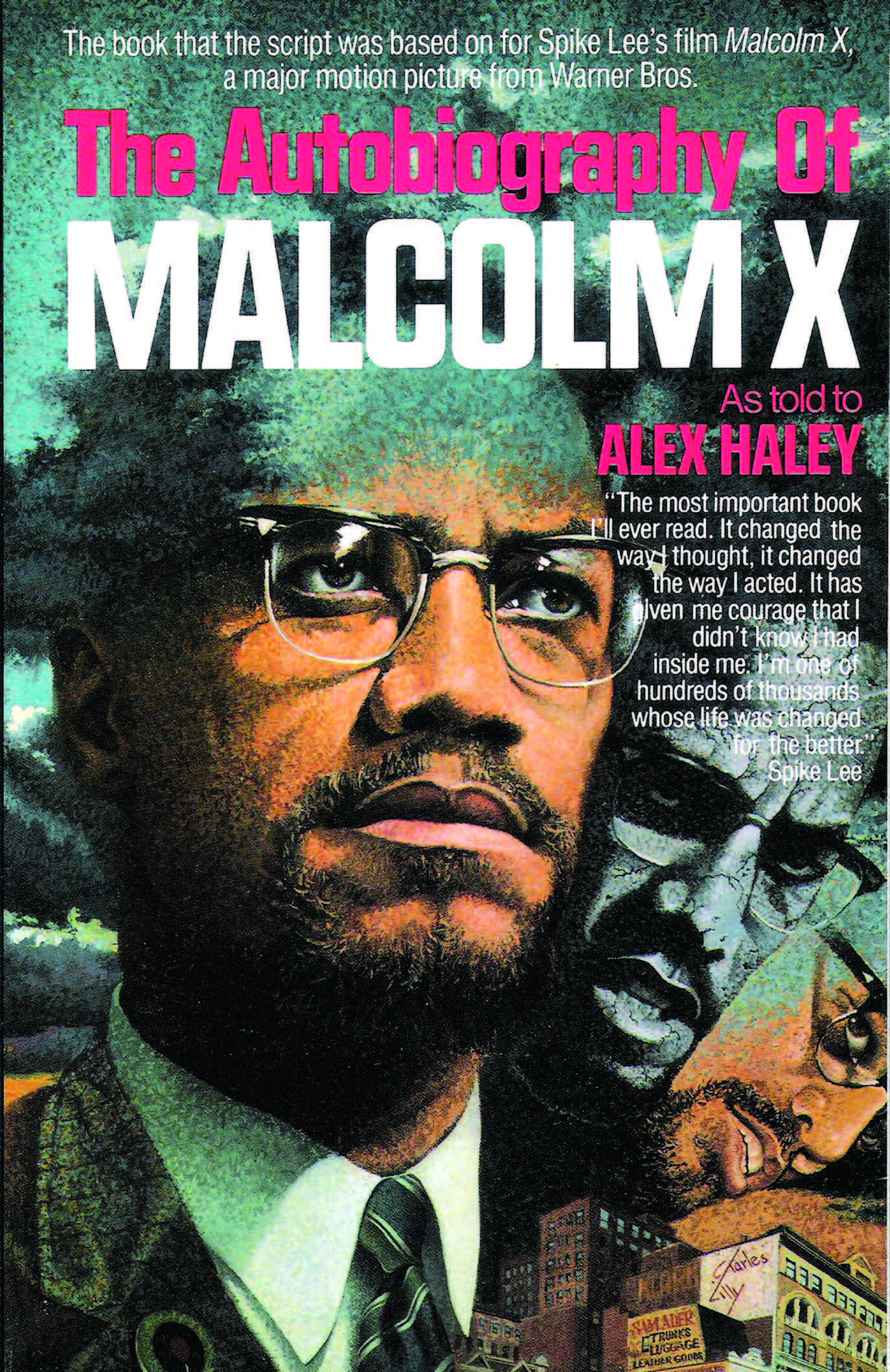
“The Autobiography of Malcolm X, as told to Alex Haley,” 1965, This Black literary masterpiece was required reading for many Black people living in the 1960s, especially for Black students attending Black colleges. Even Time magazine once called the publication, one of ten required reading nonfiction books. The book taps into Malcolm X’s life and spiritual journey from beginnings that put him on a destructive path, to the evolution that led to the embracement of Black power, Black nationalism, Pan-Africanism, the Black Muslims, and his transformation of ideologies after traveling to Mecca.
“The Souls of Black Folk” by W.E.B. Du Bois, 1903. This classic book was written more than 100 years ago by one of America’s greatest intellects, civil rights activists, sociologists and Pan-Africanists. Du Bois masterfully writes a collection of essays on how he sees race and how Black people view America compared to how White people view it. He ultimately believed that race issues in America for Black people would be major factors in their advancement for many years to come.
“The Mis-Education of the Negro” by Carter G. Woodson, 1933. Dr. Woodson, father of Black History Month, writes about the cultural conditioning, indoctrination and mis-education of Black students in American schools. The book hammers home that the mis-education causes a serious identity crisis with Black youth which begins a rippling effect that leads to many other societal problems in America. Interesting, 80 years after Dr. Woodson wrote his book, much of what he penned still exists.
“Civil Rights Chronicle: The African-American Struggle for Freedom,” primary consultant, Clayborne Carson, Ph.D. (director, Martin Luther King, Jr. Papers Project), forward written by Myrlie Evers-Williams, 2003. This 448-page book offers a brilliant rendering of the history of African Americans and their struggles as slaves in this country going back to 1526. The book chronicles significant events, dates, organizations, movements and people that impacted the lives — good and bad — of Black people in this country for almost 500 years.
“Muhammad Ali: The Unseen Archives” by William Strathmore, 2005. Muhammad Ali was unwavering in the boxing ring, and was unshakable when standing up and speaking out on social and human injustices, even if it meant jeopardizing his career and freedom. This book will take readers on a journey from when this legend won a Gold Medal at the Olympic Games in Rome in 1960 through his many victories and defeats in his personal and professional lives.
“Black Ice” by George and Darrill Fosty, 2008. The next time you hear that Black people don’t like playing hockey because it is a cold weather sport, pick up “Black Ice,” a book that chronicles the lost history of the Colored Hockey League of the Maritimes in Canada from 1895 to 1925. The league was formed by sons and grandsons of runaway slaves from America who fled to Halifax, Nova Scotia, Canada to seek freedom. To put this league in perspective, it was formed 22 years before the National Hockey League began.
“Blues People” by Leroi Jones (now known as Amiri Baraka), 1963. Jones takes readers to school to learn about what he called, at the time, “Negro music in White America.” In “Blues People” Jones analyzed jazz and blues and how both genres emanated and permeated as the music of African slaves in America. He ultimately makes astute conclusions of how the music connected with the social, economic and cultural history of Black people and how it has impacted White America.
“Kwanzaa: A Celebration of Family, Community and Culture” by Dr. Maulana Karenga, 2008. There should be no misconceptions and confusions about Kwanzaa after reading this book, because it was written by Dr. Karenga, the creator Kwanzaa. As professor and chair of the Department of African Studies, California State University, Long Beach, Karenga is one of the very few true Black intellects and activists left standing from the 1960s who had a major role in shaping the Black power movement across America.
“A Taste of Power – A Black Woman’s Story” by Elaine Brown, 1992 – Want to read more about Black power, this time from a Black woman’s perspective? This is the book and Elaine Brown is the woman. She was beautiful, but the enemies of the Black Panther Party quickly found out not to let Brown’s pretty face fool them. The book chronicle’s her bold and aggressive journey from her native Philadelphia to Oakland, California in the late 1960s, where she rose through the ranks to give top leadership to the Black Panther Party in parts of 1970s.
Of course, there are many other books that have been written and published by and for Black people in America which cover an array of topics. What are the ten books that served as your passports to knowledge, enlightenment and empowerment that other Black people should read?
About Post Author
