


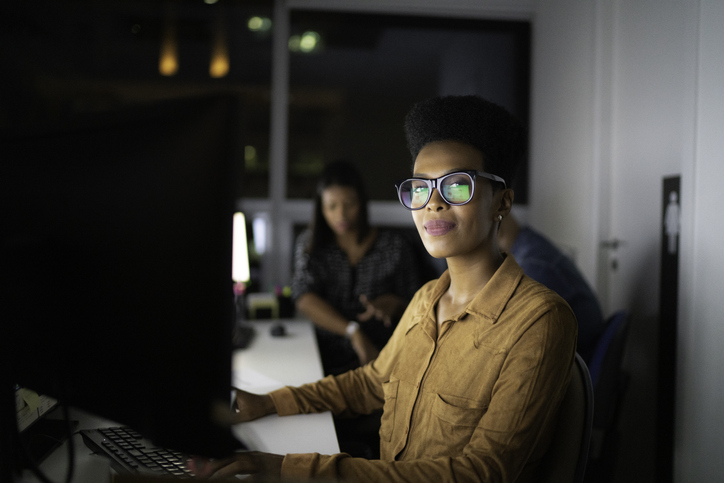
Despite enormous strides in business, government and other areas, women don’t always get the respect men do for their leadership abilities, even when they can boast greater accomplishments.
But the combination of a pandemic, a recession and an election that 2020 brought could be the impetus for changing the way people view women and their leadership styles, a development that many would argue is long overdue, says Andi Simon, a corporate anthropologist, founder of Simon Associates Management Consultants, and author of the upcoming book Rethink: Smashing the Myths of Women in Business.
“It’s time we started seeing women leaders through a fresh lens,” Simon says. “When we do, we will all benefit from their styles and their successes.”
Because presidential candidate Joe Biden picked U.S. Sen. Kamala Harris as his running mate, the country potentially could have its first female vice president on Jan. 20, 2021.
Meanwhile, around the world, many countries led by women have fared better during the COVID-19 pandemic than those led by men, with New Zealand’s Jacinda Ardern, Germany’s Angela Merkel and Taiwan’s Tsai Ing-Wen among those being hailed for their strong leadership.
Simon says anyone surprised women have what it takes to emerge as great leaders may have fallen for myths that surround both men and women when it comes to taking charge.
“Men communicate a myth about women that emphasizes their soft sides, their kindness, and their weakness, not their decisiveness, strength, and ingenuity,” she says. “Women might lead differently, but they can and are achieving remarkable results through collaboration, coordination, and creative communication, as opposed to the command-and-control methods men often employ.”
Simon offers a few observations about women, leadership and where things could be headed:
- Research shows women score better on leadership qualities. Research published last year in the Harvard Business Review showed that women ranked high in taking initiative, acting with resilience, practicing self-development, driving for results, and showing high integrity and honesty.
- More female mentors and role models will mean more female leaders. As more women gain leadership roles, the number of women in such roles will build on itself, Simon says. ““The script on women changing male-dominated workplace culture is still being written,” she says. “But one thing is for sure: The more women become leaders and assume positions of authority, the more they can help other women on their way up.”
- An anthropological approach can help. Simon is both a business consultant and an anthropologist, and she believes mixing the two is beneficial. “My career advice for women in leadership roles is to be a little anthropological when you are trying to find your own way in your job or business,” she says. “Do some observational research. Experience your product or service from your customer’s point of view, or your employees’ point of view. You’ll be amazed at what you discover, and the innovative ideas that come to you for solving unmet needs.”
“Our cultural biases lead us to believe that something created by a woman is not as good as something created by a man,” Simon says. “For us to see the work of women as at least equal to that of men, those biases must change. The question for all of us is: Can we change them?