A quality education transforms lives, improves society and secures the future for a generation.
Even against the mighty forces of political power, education is the tool that endures and makes the difference, and sometimes when the actors on the political stage act up, the question is, what kind of education did they receive?
And when well-educated minds are caught in the midst of massive public corruption that leads to indictments and convictions, we hear statements such as, “What a wasted talent,” underscoring how education should mold the character of tomorrow’s leaders.
Education is designed to make you think more critically as you ponder ways to make life in your community better for everyone, including the most vulnerable, than you did when you were first undergoing the rigors of academic training.
In 2013, Michigan has not been without battles for access to meaningful education. From the public skepticism that greeted the Education Achievement Authority, the protracted struggles of the Detroit Public Schools in defining excellence, to the dwindling of state financial support for public universities, often handicapping needy programs, all speak to the glaring need for an empowering education that is valued at every level of society.
In fact, the last decade has almost placed the state on the frontiers of the fight for educational access, coming in full circle when affirmative action ended with a battle that played out in Michigan.
Thus, as 2013 moves into the annals of history and 2014 ready to be ushered in, it is important to look at two individuals whose passion and work in education stands out among all of the other issues facing a Michigan whose political leaders are still debating what kind of value they should place on education already demonstrated in their cuts to state funding.
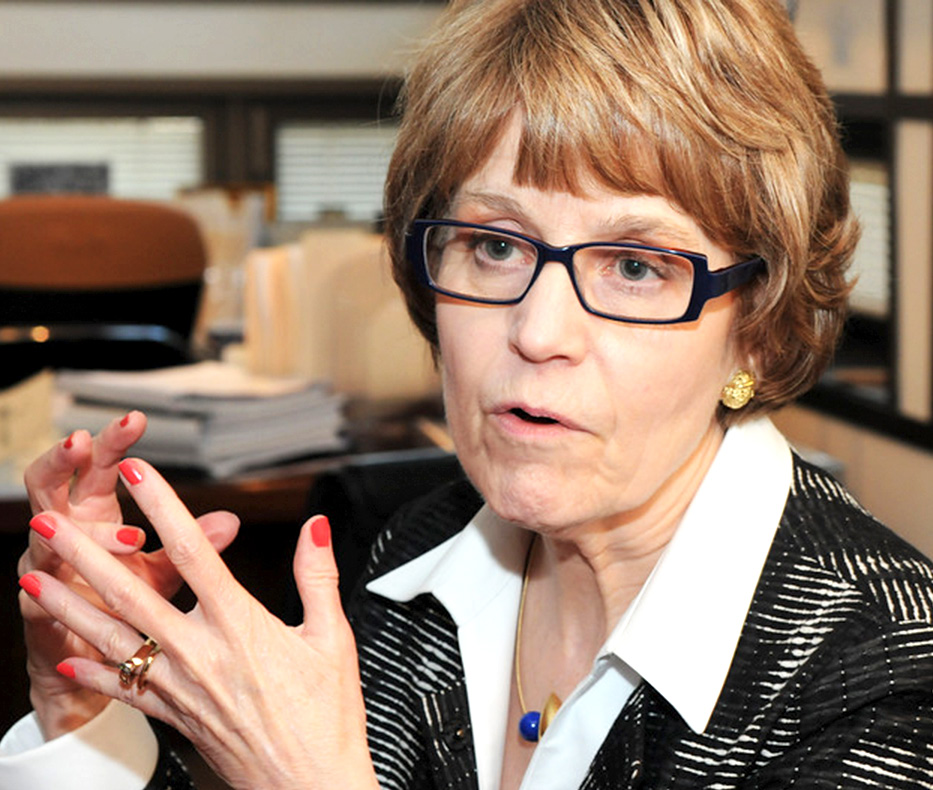
The University of Michigan’s 13th president, Mary Sue Coleman, who is on her last leg at the helm of the state’s largest university after becoming the first woman in the school’s history to lead the institution, is a transformational leader. She has enhanced the stature of the university through numerous groundbreaking researches. Perhaps her most enduring legacy is when she put up a fierce defense to protect affirmative action when it came under attack at the university.
I’ve interviewed countless heads of institutions. Some are clueless and passionless. Others are burning with fire, passion and zeal and often go out of script to demonstrate they are “outside of the box” thinkers.
The latter is President Coleman.
I sat down with her right after affirmative action was gutted to find out if the doors were shut for African American students. But first I wanted to know if her background reflects her commitment to the issue.
“I spent at least part of my growing up in a segregated South,” she said. “And I understood as a young adult how corrosive (discrimination) has been. I didn’t understand it as a child, but I understood it later — how it deprived me of experiences as it deprives other young people of experiences, like getting to know each other. And we are a nation becoming more diverse all the time, and it is important to understand other people’s perspectives. I have certainly seen it in my own career because when I was in graduate school back in the 1960s there were a lot of women, but there were no women faculty. I had no role model.”
Coleman went on to explain that in her own research she “came to understand as a young adult how the perspective of women scientists changed the questions that are asked about what science to pursue.”
As a result, she found, everyone benefits.
“So I have learned when people from different life experiences and perspectives sit around the table to solve problems, you get a better result,” she said. “So why do we want to deprive ourselves of that? It’s crazy.”
Coleman assured me that providing a diverse campus is an undying goal despite the absence of affirmative action.
“It is not only a student issue. It is a faculty and staff issue. And I want people to understand that at some point, affirmative action is still here. We are a federal contractor,” she explained. “Any federal money coming in that has affirmative action guidelines, we’ll follow it because that’s federal. We’ve been working extremely hard on the admission side for a long time.”
The university looks at “many different characteristics. The school the student went to. Where were the opportunities? Have their parents been able to go to college? We are interested in students who have overcome obstacles. All these factors are going to be important. And I am just completely committed to making sure we continue provide a diverse campus. It is very important.”
When Prop 2, the name of the ballot question on affirmative action, was voted down, it sent mixed signals and one of them was Michigan’s image as a segregated state.
Coleman agreed.
“Oh I think it’s pretty apparent because one of the things we find it that our admissions office would tell us that many of our students come to the university from high schools that are not diverse, and so their first experience with diversity is at the university,” she said. “And so it is even more of a responsibility for us to provide that opportunity for people to get to know each other and understand perspectives. I had a life experience that brought it close to me. My husband and I moved to New Mexico and this was in the 1990s. I had never lived in the Southwest, and working in that community, my eyes were opened about the heterogeneity and the diversity within the Native American community.”
Coleman said the doors for Black students are not shut at the university.
The next president of the university must confront declining Black enrollment in Ann Arbor because since affirmative action was banned, the number of students at the university dropped to 30 percent at both the undergraduate and law schools.
Mark Bernstein, a civil rights lawyer and member of the University of Michigan Board of Regents, in an interview with the Bloomberg News, said the numbers are unacceptable.
“I don’t think anybody accepts the numbers. We are as a campus, as a university committed to diversity and we’ll just have to soldier on using less effective tools,” Bernstein told the Bloomberg News.
In the same vein, Sarah Zearfoss, dean of admissions at the law school, told Bloomberg that steps to increase Black enrollment have been basically ineffective.
“So many things and, spoiler alert, none of it really has helped,” Zearfoss said about efforts to enhance minority enrollment.
As Coleman prepares to bow off the stage, the incoming president has their work cut out in an age where diversity is more than just a notion. It is a way of life and a significant advantage for any educational institution. But most importantly, the leadership demeanor and character traits of the next president will determine what the University of Michigan will become 10 years from now, and its overall urban impact in places like Detroit.
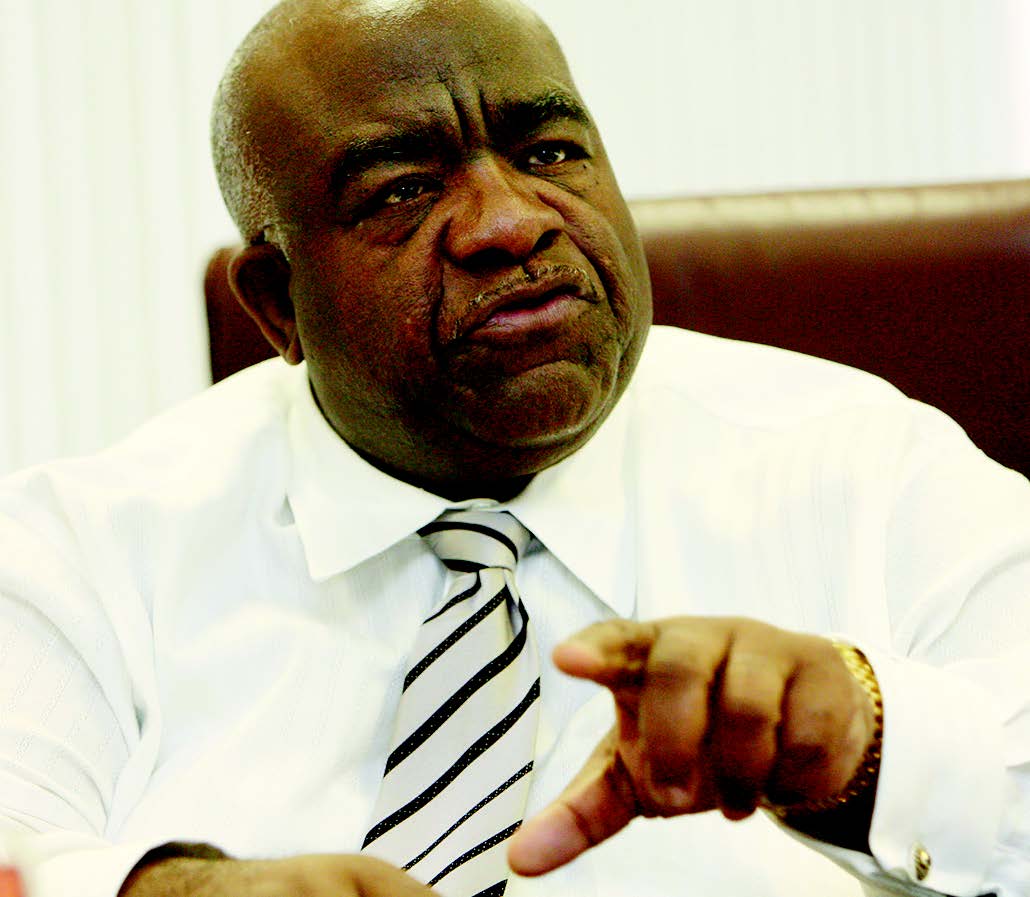
Dr. Curtis Ivery, chancellor of Wayne County Community College District, is a change agent transforming Michigan’s largest urban community college into an education nest where leadership is not only cultivated and academic goals accomplished, but a place that gives a real chance to students.
Understanding the weight of its responsibility as an urban institution with over 70,000 students, Ivery is equally passionate. In my interview with him he quickly coined the phrase “unholy trinity: unemployment, underemployment and underserved,” and said they are responsible for many not getting a good education.
“The common denominator is poverty. It’s always going to be how we help others lift themselves up and ensure that they have a way out,” Ivery said. “We’ve always said to people if they come to the college, we’ll make them proud and feel good about themselves. We are going to treat you with civility and honor your dignity. We are going to take you where we find you and help you move to the next level.”
Helping students overcome the challenges they face does not mean giving them a handout, he quickly noted.
“We cannot give you a crutch,” he said. “We will not make this an entitlement community. We cannot make this an entitlement educational setting. We want you to compete. We want you to be mentally and psychologically tough.”
A recent study by Stanford University Center for Education Policy Analysis showed that race and income factor into high enrollment numbers at the top tier universities in the country. The report from 1982-2004 showed that Black and Hispanic students were grossly underrepresented in Ivy League schools or the most selective colleges.
Among the findings was the widening racial gap in academic preparations, which also has a strong connection to the socioeconomic backgrounds of the students.
Ivery says that the value of education and seeing it as a weapon to fight poverty should start at home.
“So much of it and who we are has to start at home. For instance, by the age of three you’ve got a young person with a personality,” Ivery said. “You are not going to change that personality after three years of age.”
He pointed out that at age six, children begin to develop an early self-concept that education is key and that is when they should be taught the value of education at home. Otherwise, the children risk falling through the cracks and coming into contact with the criminal justice system by the age of 15.
“Education in Detroit must be seen as a form of constructive urgency, that every decision ought to be one of urgency. That sense of urgency means involving the community in a big way in decisions that affect the education system in the city.
I know that it’s difficult. Sometimes we don’t feel that people are listening,” Ivery said.
“They don’t understand when we say we’ve got to close X number of schools. Most parents are not interested in that aspect of education economics. Their sense of urgency is what is going to happen to their child? Will their child be safe in school? Will they have good teachers and the opportunity to go to college? We have to begin to answer those questions for parents.”
Coleman and Ivery, beyond their prescribed responsibilities, have expanded their scope in many ways, including serving in a number of national roles.
For example, Coleman was named to the National Advisory Council on Innovation and Entrepreneurship as co-chair to play “a key role in advising on innovation and entrepreneurship policies.”
Ivery was named to the 21st Century Commission on the Future of Community Colleges, an initiative supported by The Bill and Melinda Gates Foundation and The Kresge Foundation, to craft a bold vision for community colleges regarding how to attain higher quality education.
Despite the preponderance of less than encouraging news coming out pertaining to Michigan education, as legislators continue to pounce on state support for education funding, some can take stock, hope and confidence in the work of Coleman and Ivery in their positions.
Nelson Mandela said it best: “Education is the most powerful weapon we can use to change the world.”
E-mail BThompson@michronicle.com.
About Post Author
