Today, National Domestic Workers Alliance and the Institute Women’s Policy Research (IWPR) released, “The Status of Black Women in the United States,” the most comprehensive report on Black women in every state.
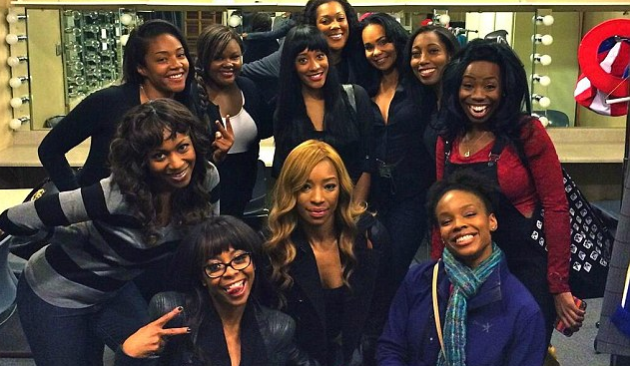
Findings from the report were discussed by eight Black women leaders during a groundbreaking panel at the policy research forum, “From Persistence to Power: Facts, Truth & Equity for Women,” moderated by Alicia Garza, Special Projects Director at NDWA and Co-founder of Black Lives Matter.
“Here is the dynamic that exists: while Black women are central in holding together households in our communities, they are more likely to bear the hits, like employment and housing discrimination, and mass incarceration,” said Monifa Bandele, Vice President & Chief Partnership & Diversity Officer at MomsRising.org. “Black mothers sit at the intersection of sexism, racism, and maternal discrimination. We are the seams of the solution.”
“There are 50,000 elected seats in this entire country, and Black women makeup 7 percent of the population. Yet, Black women hold only 3% of U.S. congressional seats,” said Jessica Byrd, Founder and Principal Strategist, Three Point Strategies. “There are structural barriers in our path, like racist gerrymandering laws. Everyday, I wake up to fight gatekeepers who say that Black women are not smart enough, not viable enough, not worthy enough. There are people sitting in Black women’s chairs. It’s time for them to get up. We have to choose Black women.”
“When you look at how Black women participate, it’s not just politically, it’s in the economy. We are the backbone. We are the caregivers,” said LaTosha Brown, Project Director, Grantmakers for Southern Progress, Neighborhood Funders Group. “But in the state of Louisiana, Black women make almost half of what their white male counterparts make. Black women always show up. The question is: who shows up for us? We have to hold progressive philanthropy accountable. And we have the creativity and innovation to create alternatives.”
By analyzing available data from all 50 states and the District of Columbia, the report paints a picture of Black women’s lived experiences across the country. It offers recommendations across six issues, where opportunities for Black women can be truly realized, including political participation; employment and earnings; work and family; poverty; health and well-being; and violence and safety. The report also shares far-reaching data on the domestic and care work sectors, illustrating the current and historical contributions of Black domestic workers in the U.S.
“Being a single mom is difficult enough — now add low pay, insufficient means of safety, lack of proper procedure in caring for home care clients,” said Chakilah Abdullah Ali, a home care worker for over 38 years, and leader with We Dream in Black North Carolina, a program of NDWA. “There are a lot of expectations on home care workers, but little help from the government and agencies. My vision for the future is for domestic workers to be included in federal, state, and city level labor protections.”
“Black immigrants have been coming to the United States since the 1800’s. We’ve always had a presence and we’ve always been contributing to the social fabric. Yet, our experiences are guided by the racism that has been in this country. ,” said Nana Afua Y. Brantuo, Policy Manager at Black Alliance for Just Immigration. “We carry the whole world on our backs, and never get the credit for our work. I would like to see continued collaboration across the diaspora. What is happening with sisters in Brazil or in Kenya? We have a lot to learn from each other. Remember: immigrant detention is just a carbon copy of mass incarceration, but for profit.”
“Black women are more likely than any other demographic group to work in sectors with lowest pay. Black women are overrepresented in low-wage work and underrepresented in top-wage work,” said Tanya Wallace-Gobern, Executive Director, National Black Worker Center Project. “Growing up, we were taught to get an education, and get a good union job. But we know that’s not enough. We cannot deny that racial discrimination is a culprit here. I would say to Black women that we need to take leadership roles. And for others: make space for people with different opinions and for people who don’t look like you.”
“There are so many Black women who are in the caregiving sector. But they do not have access to quality childcare. Our country has a piecemeal childcare system that is not affordable to anyone,” said Tracy Sturdivant, Co-Founder and Co-Executive Director of Make It Work. “You cannot talk to a Black woman about childcare policy with addressing her fears over her child walking down the street. These issues intersect. We have to engage Black women and women of color from a whole person perspective. Black women need the resources and support to lead.”
Alicia Garza of NDWA wrapped up the panel, “Let this be an introduction. We’re not even in the middle of the conversation, we just scratched the surface. Let’s keep it going.”
Additional report findings can be found below. For more information on the Status of Black Women report, visit: www.domesticworkers.org/status-black-women-united-states
Top Report Findings
• LABOR & CARE: Black women have one of the highest labor force participation rates out of all women in the country, and make up nearly 30% of the care workforce. Yet, continue to face low wages, and barriers to health care, childcare and paid sick days.
• FAMILY: In 8 out of 10 Black families in the United States, Black women are either the sole breadwinners or contribute more than 40% of the family’s income.
• POVERTY: Black women have the highest poverty rate of any ethnic group other than indigenous women, especially in the South. (25% of Black women live in poverty).
• INCARCERATION: In 2014, Black women of all ages were twice as likely to be imprisoned as white women. (For young women, it’s almost four times as likely).
• IMMIGRATION: Black immigrants are a growing population in this country, yet their issues continue to be erased from the conversation (20% live below the poverty line).
• VIOLENCE: Black women experience high levels of violence. 40% of Black women experience domestic violence, which is much higher than for women overall.
• DEMOCRACY: Black women are working hard for our democracy. In 2008 and 2012, Black women had the highest voting rate of all groups of men and women.
• POLITICAL PARTICIPATION: Yet, Black women are underrepresented at every level of state and political office. As of August 2016, Black women held 3.4 percent of elected seats in Congress and just 1 seat in the Senate.
About National Domestic Workers Alliance
National Domestic Workers Alliance (NDWA) is the nation’s leading voice for dignity and fairness for the millions of domestic workers in the United States, most of whom are women. Founded in 2007, NDWA works for the respect, recognition, and inclusion in labor protections for domestic workers. It’s won legislation protecting domestic workers’ rights in seven states including New York, California, Hawaii, Massachusetts, Oregon, Connecticut, and Illinois. The Alliance is powered by over 60 affiliate organizations — plus local chapters in Atlanta, Durham, Seattle and New York City — of over 20,000 nannies, housekeepers, and caregivers for the elderly and people with disabilities in 37 cities and 18 states.
About We Dream in Black
We Dream in Black (WeDIB) is a program of the National Domestic Workers Alliance that is designed to build the organizing and movement building capacity of Black diasporic domestic workers. WeDIB organizes U.S. born and Black immigrant domestic workers, building the capacity to shape a new economy and a new democracy for all of us.
About the Institute for Women’s Policy Research
The Institute for Women’s Policy Research (IWPR) is a 501(c)(3) tax-exempt organization that conducts and communicates research to inspire public dialogue, shape policy, and improve the lives and opportunities of women of diverse backgrounds, circumstances, and experiences.
New Report on the 'Status of Black Women in the United States'