


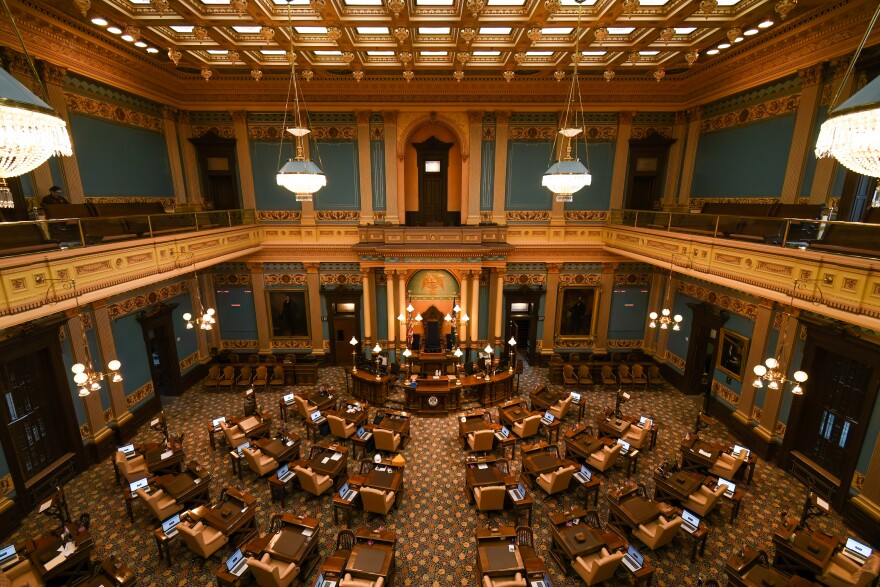
Two weeks have passed since Michigan lawmakers left the Capitol without a budget deal. Now they’re back—but for school districts across the state, the damage from that delay has already begun. The uncertainty continues as the state’s House and Senate return to negotiations this week without a clear path forward on K-12 funding.
Local school boards were forced to pass their own budgets without knowing how much state aid they’d actually receive. For educators and administrators, that’s not just inconvenient—it’s destabilizing.
“There hasn’t been a lot of conversation around the last couple of weeks that there’s been earnest negotiations happening, that there’s been progress made toward getting this deal done. It’s just been very quiet instead,” said Robert McCann, executive director of the K-12 Alliance of Michigan.
That silence has translated into worry for districts already trying to prepare for the upcoming school year. Many have been left making guesses on staffing, classroom resources, and support services while Lansing’s partisan gridlock continues to hold up concrete numbers.
The core disagreement remains. Senate Democrats want to pass the full state budget as one complete package. House Republicans continue to resist that approach, instead pushing to pass school and road funding separately and simultaneously. But even that strategy has hit a wall—most of the House’s department budget proposals haven’t even been introduced yet, let alone passed.
Transportation advocates are urging lawmakers to make room for road funding, concerned that the issue could get lost in the fight over school dollars. But school advocates argue that trying to pair the two is a political maneuver that could jeopardize educational outcomes, particularly for the districts already operating on thin margins.
McCann and others are opposed to linking road and school funding in this way. Their fear is that if roads and education are lumped together in a single package, lawmakers may try to pull from the School Aid Fund to help meet infrastructure goals—diverting money that was never meant to patch potholes instead of investing in classrooms.
The conversation has also grown more complex over how that school funding should be structured. House Republicans have proposed increasing general per-pupil allocations while stripping out dedicated funding for key programs like free school meals or mental health support. Their argument centers on flexibility—giving local districts control over how they use state funds. Senate Democrats support higher per-pupil spending as well but want targeted investments maintained to ensure every child has access to basic supports, regardless of zip code.
McCann doesn’t necessarily oppose a long-term conversation on how to rework school funding. But the timing, he says, is dangerous.
“Those are conversations that need to be held in February, not in July,” McCann said.
School districts are already operating in the dark. Without final numbers, some may be forced to lay off staff or hold off on investments they’d otherwise make in classrooms and support services. That’s especially critical for low-income and rural districts that rely heavily on state funding and can’t fall back on local tax bases to fill in the gaps.
The budget delay has now crossed into July, with students scheduled to return to school in just a few weeks. The longer negotiations drag on, the more likely it becomes that districts will have to revise or cut budgets mid-year—something that puts students at the highest risk further behind.
The conversation has also grown more complex over how that school funding should be structured. House Republicans have proposed increasing general per-pupil allocations while stripping out dedicated funding for key programs like free school meals or mental health support. Their argument centers on flexibility—giving local districts control over how they use state funds. Senate Democrats support higher per-pupil spending as well but want targeted investments maintained to ensure every child has access to basic supports, regardless of zip code.
For Detroit Public Schools Community District (DPSCD), this debate holds serious weight. Free lunch and other wraparound programs are not optional add-ons—they’re vital. Many Detroit students rely on school meals as their most consistent source of nutrition. Stripping out dedicated funding for those programs places an unfair burden on districts already operating with limited resources, forcing them to choose between basic needs and classroom priorities. In communities where systemic inequities already shape educational outcomes, flexibility without safeguards can mean losing the very programs that keep students fed, supported, and safe.
“We can’t be opening our doors to students over the summer and into the fall and radically re-shape how funding works,” McCann said. “That would send countless districts into deficit.”
Meanwhile, road funding remains a political bargaining chip. Some leaders are hoping to put up to $3 billion toward infrastructure improvements, whether through the House-backed plan or a separate strategy proposed by Governor Whitmer. But any attempt to tie that effort to school funding continues to draw resistance from advocates who insist education needs to remain a standalone priority.
Legislative leaders have yet to provide a clear timeline for when a deal could come together. Without a final budget, districts are stuck in a holding pattern—unable to confirm staffing, purchase materials, or commit to student programming.
For communities across Michigan, especially those with a history of underfunding and disinvestment, the cost of delay grows heavier by the day. What’s at stake isn’t just dollars, but the ability for schools to prepare, serve, and support children in the ways they deserve.
The Legislature’s return to budget talks this week offers an opportunity to end the stalemate—but whether lawmakers will center students and communities in those decisions remains to be seen.