Urban mayors say their cities and their people are suffering from state cuts in revenue sharing as part of financial challenges facing their local municipal governments, and they want a plan from Lansing to address the unique urban challenges of individual cities, such as population loss, education, public safety, disinvestment, retirment health care plans, among other issues confronting them.
That was the central message from six of the most prominent mayors in Michigan during the “Decay of Urban America” forum held May 3 at Fellowship Chapel in Detroit.
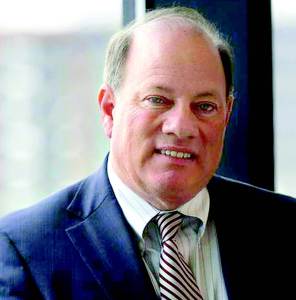
The program ,sponsored by the Freedom Institute led by the Rev. Wendell Anthony as part of activities leading up to the NAACP 59th Fight For Freedom Fund Dinner, brought together Detroit Mayor Mike Duggan, Inkster Mayor Hilliard Hampton, Highland Park Mayor DeAndre Windom, Pontiac Mayor Deidre Waterman, Lansing Mayor Virg Bernero and Southfield Mayor Brenda Lawrence.
“I believe the state’s agenda for urban and all local units of government must affirm an urban agenda to legislate appropriations to help reinvent healthy and growing local cities. Every day the quality of life for Michiganders is impacted by the choices that are made at the local level of government like public safety, public works, economic development, environment issues, recreation and paying for unfunded federal and state mandates,” said Mayor Hampton.
He said the state should “proactively encourage local communities to work together to share services but don`t withhold revenue sharing for shared services already in place prior the creation of EVIP (the Economic Vitality and Incentive Program).”
“Understand that a thriving community is a safe community and cities are the foundation of our state. The economic success at the local level is the thermostat for the economic temperature of the state health,” Hampton continued. “Most importantly, value that a quality education leads to successful cities by implementing a uniformed funding system to support schools regardless of location or community type. Stop the feast and famine approach to our educational structure.”
Hampton said the fact that there is a record number of local governments in the state that are under some form of state review or oversight, “should trigger not only efficiency and shared service but also the Michigan Economic Development Corporation for help.
“Last year, it sprinkled some $100 million about the state to incentivize businesses to either relocate to or expand in Michigan communities like Inkster should be given advantage or priority due to the fact that at the end of the day we need economic stimulus, not a takeover.”
Southfield Mayor Lawrence echoed similar sentiments.
“Michigan cities can better be helped by state government in two major ways,” Lawrence said. “First, restore revenue sharing to its previously mandated formula pre-Governor Snyder so that local government can better fund public safety services, among other municipal functions.”
Lawrence cited the U.S. Conference of Mayors as an organization that is working to address challenges faced by cities by advocating on their behalf to the federal government.
But she noted that the state has a responsibility to help its cities thrive, and that emergency management isn’t the road to fiscal solvency for local municipalities.
“Equally important, repeal Public Act 436 and provide an approach that both better helps to eliminate structural and current budget deficits but also respects the vote of local citizens,” Lawrence said. “In my view, both democracy and fiscal integrity are important. Cities like Detroit, Hamtramck, Royal Oak Township and Pontiac would be greatly help by such an approach.”
Pontiac Mayor Waterman gave an overview of the tenuous road from financial management and the challenges the city faces as it merged its public safety apparatus with Oakland County Sheriff’s Office.
Waterman remained upbeat that her city is coming back and that she plans to ensure that Pontiac is not defined by its past emergency management status, but rather its potential to create a future for residents and businesses that call the city home.
Highland Park Mayor DeAndre Windom said against the backdrop of reports that the city will be declared financially insolvent by the state, he doesn’t agree with that desgination, and has conveyed that message to state authorities to look at all options.
Windom, like the other mayors, said what Highland Park needs is adequate support from the state, not an intervention like financial management, which the city has already been through during the administration of Democratic governor Jennifer Granholm.
Lansing Mayor Virg Bernero, former Democratic nominee for governor, said unless municipalities make a strong commitment and stand together, there will be little change to the ongoing economic challenges their cities are facing.
Bernero said part of the problem is how local governments are funded and called for a revamp, noting that cities are the core of the state. If they go, so goes Michigan.
Detroit Mayor Duggan, who offered special remarks at the start of the forum, repeated what he said in an interview with the Michigan Chronicle last week — that he is committed to making blight history in Detroit and bringing back the city’s perceived dying and neglected neighborhoods.
Duggan touched on several multiple points of success in getting homeowners to respond and sign consent agreements to fix their homes, instead of facing a lawsuit from the city.
Governor Rick Snyder’s office responded to the call for an urban agenda.
Spokeswoman Sarah Wurfel said the governor has an urban agenda which is why “we worked with Michigan Foundations in a unique effort to focus on this area with the development of the Office of Urban & Metropolitan Initiatives (OUMI) with representatives in Detroit, Flint, Grand Rapids and Kalamazoo, and why we have a special advisor for placemaking in the Governor’s Office.”
The OUMI is headed by Harvey Hollins, who said in a phone interview Tuesday afternoon that the governor has defined an urban agenda with the participation of hundreds of stakeholders across the state to target core areas that require state support in cities.
Wurfel said the governor’s urban agenda is the reason “we’ve worked so hard on challenges facing Detroit and working in collaboration with the city. The governor believes a vibrant Detroit is essential to a strong, thriving Michigan.”
In a gubernatorial election season, all bets are on the table, and an urban agenda is going to be a part of the election.
“Restrictions of Headlee and Proposal A need to be modified to allow cities, townships and villages to raise revenue to fund specific services that the residents deem critical to their quality of life or that businesses believe are necessary to support their investment in cities,” said Hampton.
Bankole Thompson is the editor of the Michigan Chronicle. E-mail bthompson@michronicle.com
About Post Author
