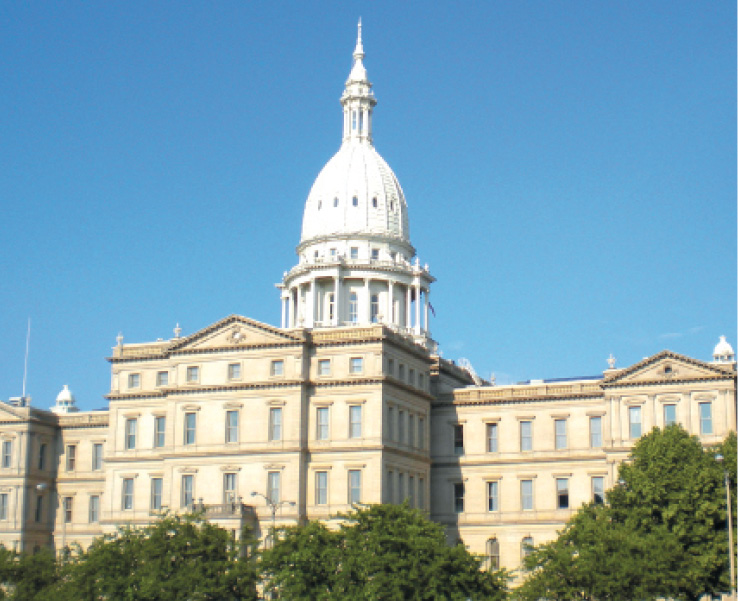
Despite the threat of facing a primary challenge from the Michigan chapter of Americans for Prosperity sponsored by the billionaire Koch brothers, House Republicans in Lansing last week joined with Democrats to support the long-anticipated “Grand Bargain,” a package of 11 bills that would help settle the Detroit bankruptcy deal.
In particular, the bills would provide an estimated $195 million towards the bankruptcy settlement with Detroit retirees as well as create an oversight financial committee that would include the mayor and city council president as well as other appointments by the governor.
Americans for Prosperity had threatened that it was reaching out to 90 conservatives in the state to prepare a primary challenge to any Republican who voted in support of the Detroit deal.
“I sincerely thank the members of the Michigan House of Representatives for working swiftly, and in a bipartisan fashion, to pass legislation which is critical to Detroit’s efforts to get back on firm financial footing,” said Detroit emergency manager Kevyn Orr. “The State of Michigan’s willingness to participate in a negotiated settlement that will limit financial impact to the city’s two pension funds and protect the city-owned treasures at the Detroit Institute of Arts is a critical component to the city’s proposed Plan of Adjustment.”
Detroit State Representative Thomas Stallworth, a member of the Detroit delegation that voted for the bills, defended his vote.
“The alternative to this package would be to sentence retirees who worked hard for the city to a life of poverty by drastically cutting their pensions, and I could not be a part of that. These bills are the best deal and we need to move them through the Legislature and to the governor to be signed into law,” Stallworth said. “The city will have a say in its governance during this time, and there is also a pathway out of oversight. The bills now go to the Senate for consideration.”
The bill having cleared the House now moves to the Senate.
Meanwhile Doug Rothwell, president and CEO of Business Leaders for Michigan underscored the ne,cessity of the 11-packaged bill.
“This package represents an opportunity to make history, by getting Detroit through the largest municipal bankruptcy ever, on time and in sound fiscal condition, and provide a model for the nation,” Stallworth said. “To those outside our borders, Michigan’s image is greatly influenced by the image of Detroit, so it is critical for Detroit and Michigan that Detroit be able to meet the citizens’ expectations for providing sound fiscal management, effective public safety, and cost-effective and reliable basic services.”
Rothwell and others are urging a quick bipartisan action in the upper chamber of the Legislature.
The Detroit Regional Chamber also expressed a similar view.
“This vote was not only a strong sign of bipartisanship, but also a critical piece in helping the state’s largest city emerge from bankruptcy. With the legislation now headed to the state Senate, Detroit is one step closer to emerging as a stronger, leaner and more sustainable city, positioned to thrive in the global market,” the Chamber said in a statement.
State Representative David Nathan, another lawmaker from Detroit, dismissed the package of bills as “gross overreach” into Detroit’s affairs.
“While the package does contribute $198.4 million to lessen the bankruptcy’s impact on city retiree pensions, it also sets up an oversight committee that will essentially takeover Detroit and trample over the city’s democracy. As an elected official representing Detroit and its residents, I could not in good conscience support this package. The legislation that was voted out of the House today is a gross overreaching of the state into city affairs,” said Nathan who is term limited and gearing up for a run for the Senate.
Nathan added, “The city of Detroit deserves more from the state. I support Detroit pensioners 100 percent, and believe the state could have done more to protect their retirements. Recently, the Legislature handed out a $2 billion tax cut to big corporations at the expense of middle-class families and seniors, without creating any new jobs. The state has also poured millions of dollars into stadium projects with no strings attached. So when the state offered to give Detroit less than $200 million to save its pensioners, with the catch that the state would also be taking over city affairs, I had to stand up and say, ‘Democracy is not for sale.’ We pass legislation every day that solves problems without undermining local control and representative government.”
But for Dearborn Heights State Representative David Knezek, the bills are crucial for the city’s recovery.
“These bills provide the City of Detroit with the financial tools needed in order to quickly emerge from the bankruptcy proceedings and also protects retirees from the draconian cuts that would have been experienced under a judge’s ruling,” Knezek said. “As a result of today’s votes, city retirees will no longer be faced with an almost 40 percent cut to their retirement income. Such a thing would be unconscionable to me, so I am pleased that we were able to protect workers while providing responsible fiscal oversight.”
The Detroit Institute of Arts, which is at the center of the bankruptcy deal, hailed the bills.
“As a partner in the ‘Grand Bargain,’ the Detroit Institute of Arts is pleased that the Detroit’s Recovery and Michigan’s Future Committee of the Michigan House has passed the legislation needed to ensure state financial support. Today’s vote is a strong statement that the future of Michigan’s largest city is important to all state residents and the DIA is pleased and proud to be a part of the solution to Detroit’s fiscal crisis,” the DIA said.
Bankole Thompson is the editor of the Michigan Chronicle. Email bthompson@michronicle.com.
About Post Author
