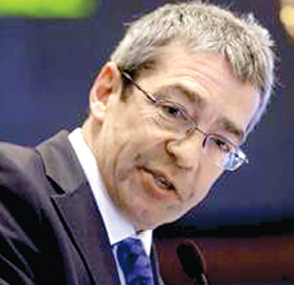
 Israel’s top diplomat to the Midwest came to dinner to sell Israel as a product any nation or community would want to seek partnership with as part of his mission in establishing links and building new bridges. I came to dinner to advocate for Detroit as a place that is on the rebound with much untapped potential and a city that Israel should seriously consider establishing a meaningful relationship with in the form of a memorandum of understanding to promote trade and educational opportunities among other things between the two jurisdictions.
Israel has already proven to the world that it is indeed an economic miracle. And what better time to begin a Detroit-Israel engagement than now when the world’s attention is on Detroit for many reasons. Thus, a partnership that touches on business, education and agriculture, among other things, stands to transform lives and make an impact.
And so amidst the escalating crisis and carnage in Gaza in the Middle East, I received a call last week requesting my availability to have dinner on July 23 with the Israel Consul General to the Midwest, the Honorable Roey Gilad who was coming to town for a shuttle visit.
Despite the short notice I moved some things around on the calendar and accepted the request from Robert Cohen, executive director of the Jewish Community Relations Council of Metropolitan Detroit, the public affairs voice of the Jewish community in Michigan.
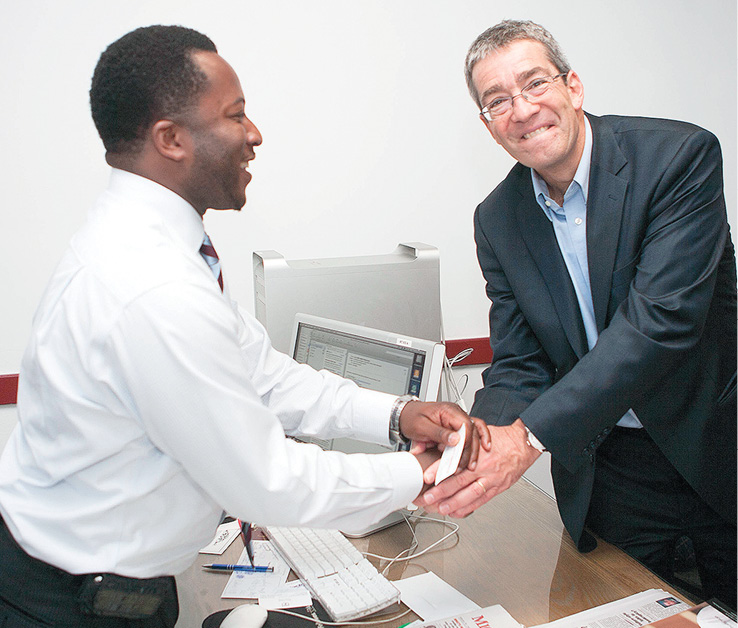 Cohen made it clear that he wanted Gilad and I to meet at a place that was mutually convenient because after our dinner the Israeli diplomat was headed to Congregation Shaarey Zedek in Southfield for a community-wide Israel Solidarity rally, to address thousands of Jews about the current crisis between Israel and Hamas. Gilad had just returned from Israel.
I suggested to Cohen we meet somewhere in Midtown for dinner and he readily agreed because Gilad would have finished a brief engagement in downtown Detroit before driving to Midtown for the one-hour-and 20-minute private dinner.
We met at the Midtown Grille and it was just the three of us: Cohen, Gilad and myself. Call it a crossover alliance meal or, better still, a diplomatic dinner that touched on many subjects from the historic ties between Blacks and Jews in the context of the relationship between Abraham Joshua Herschel and Dr. Martin Luther King Jr.; the need to define a practical and productive engagement model for African American and Jewish leaders; reigniting the relationship between Israel and Detroit in terms of opportunities for business; and the perceptions that are being created about both Israel and Palestine from the current crisis in the Middle East.
Gilad and I have been in touch. He has visited my office in the past and has since expressed strong interest in creating a working relationship between Israel and Detroit, and also help rekindle the bonds of brotherhood and sisterhood that once defined the link between the African American and Jewish communities across a myriad of issues, including civil rights.
I have been impressed with Gilad since our introductory meeting a year ago because he is open-minded, willing to reach out for a crossover partnership in ways that are sometimes unconventional with regard to the regular duties of a diplomat. If he continues on this path he stands on the threshold of creating a historic impact in the Midwest, especially in Detroit and Chicago, two cities with significant African American presence.
But this time around Gilad’s visit to Michigan conveys an added significance because it is on the heels of the crisis in the Gaza, and I was looking forward to hearing from the man who presides over the affairs of Israel in the Midwest.
After mild jokes and exchange of pleasantries as well as brief conversation about how each of us is absorbed in our work, we sat down for dinner.
While dining, the Consul General did not hesitate to state the well-known position of the Israeli government in a historic crisis that has had nations weeping for decades: Israel will defend itself if it comes under attack by Hamas.
Throughout dinner it was evident that the Gaza crisis was hanging over us like the sword of Damocles. But the realization soon came that the Israel-Palestine crisis, which is a matter of great magnitude and complexity, could not be resolved over an hour dinner in Midtown.
It was clear that an issue that has long been a critical factor in U.S. foreign policy could not be settled at a dinner meeting.
However, I came to dinner with the educated understanding that the Israel-Palestinian conflict is a battle over land and statehood. A land said to have been given to Abraham from whom both Jews and Palestinians trace their roots. Beyond the sound bites and images in the media about the present crisis lies the question of national identity in the existential conflict, which both Israel and Palestine legitimately claim. The U.S. has long supported each nation’s right to exist.
“What we have in Gaza is a confrontation with a state (Israel) that believes in self-determination,” Gilad said. “Hamas is using innocent people to protect their missiles while Israel is using missiles to protect their own people. What is happening is a tragedy and our heart is bleeding.”
As dinner continued and after discussing the obvious — the Israel-Palestine conflict — Gilad switched subjects quickly to issues in Detroit. It did not come as a surprise to me that Gilad, the Israeli diplomat, has been observing the news coming out of Detroit, including the water crisis as well as the political races in the state including the U.S. Senate race between Democratic Congressman Gary Peters and former Republican Secretary of State Terri Lynn Land.
He began to discuss possible areas and opportunities of engagement between Israel and Detroit, as well as carving out ways to successfully engage leaders of the African American and Jewish communities in shared interests and collective integrity.
This affirmed the truism that the global economy is so integrated that one part of the globe can be feeling the shocks of conflicts, yet it does not create a standstill in another part of the globe. And in this case, the protracted battle in the Middle East with its deep-seated bloody history of territorial disputes over national existence and politics is not stopping business in Detroit.
To put it bluntly, Gilad, wants to create a distinctive relationship with Detroit: one that allows Israel to make available its resources across bilateral partnerships, as well as identify avenues where both jurisdictions can be mutually beneficial to each other. Detroit needs a lot of help and if help can come from Israel at this crucial time of the city’s resurgence, it should be welcomed by everyone who is invested in the future of this city.
As we discussed an Israel-Detroit partnership, “Start-up Nation: The Story of Israel’s Economic Miracle,” a book that Gilad autographed and sent a copy of to me after our first meeting came to mind. The book, written by Dan Senor and Saul Singer, examines how Israel’s entrepreneurial and innovative model directs its economic future. It is an important read for anyone who wants to understand how one of the smallest nations in the world wields so much economic might.
Though this may readily stir up patriotic angst here at home, this is what the authors of “Start-up Nation” wrote about the ingenuity of Israeli children compared to their American counterparts, a criticism that has been similarly leveled against America’s educational competitiveness when it comes to emerging markets like India and China.
“Innovation often depends on having a different perspective. Perspective comes from experience. Real experience also typically comes with age or maturity. But in Israel, you get experience, perspective and maturity at a younger age because the society jams so many transformative experiences into Israelis when they’re barely out of high school. By the time they get to college, their heads are in a different place than those of their American counterparts,” the authors wrote.
Israel is an agro and tech driven nation, which is not a secret to the world. Just last week, three Israel water technology companies, Advanced Mem-Tech, Atlantium and RWL Water, visited Chicago, Minneapolis, Philadelphia and Delaware. It should not come as a surprise that the cities these companies visited are positioning themselves as global trade, tourism and investment partners.
Detroit can do the same. One thing we need desperately in this city is global investment that puts the city on the global map. To do that, let’s begin to explore what Israel through Consul General Gilad can offer to a great American city whose entire story is yet to be written, even as it wriggles through the morass of bankruptcy.
Bankole Thompson is the editor of the Michigan Chronicle and author of a forthcoming book on Detroit. His most recent book, “Obama and Christian Loyalty,” deals with the politics of the religious right, Black theology and the president’s faith posture across a myriad of issues with an epilogue written by former White House spokesman Robert S. Weiner. He is a senior political analyst at WDET-101.9FM (Detroit Public Radio) and a member of the weekly “Obama Watch” Sunday roundtable on WLIB-1190AM New York. Email bthompson@michronicle.com or visit https://www.bankolethompson.com.
About Post Author
