

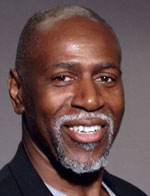

The Rev Dr. Bernard LaFayette is presently a distinguished senior scholar-in-residence at the Candler School of Theology at Emory University. A man with an unassuming character and disposition mixed with humility and wit, LaFayette occupies an important seat in the history of the African-American pilgrimage, most notably during the Civil Rights Movement of the 1950s and 1960s. A foremost authority in the world on non-violence and Kingian philosophy, LaFayette was appointed by Dr. Martin Luther King Jr. to be the national program administrator of the Southern Christian Leadership Conference (SCLC) and national coordinator of the 1968 Poor People’s Campaign, which was a watershed for the Civil Rights Movement.
LaFayette cofounded the Student Nonviolent Coordinating Committee in 1960 and directed the Alabama Voter Registration Project in 1962. On the 2010 celebration of the Martin Luther King Holiday, LaFayette sat down with Michigan Chronicle senior editor Bankole Thompson at the King Center in Atlanta for an in-depth conversation. Excerpts follow.
MICHIGAN CHRONICLE: With President Obama’s election and given the issues we are faced with, what does it mean to celebrate the Martin Luther King Jr. holiday?
BERNARD LAFAYETTE: The most important thing about what has happened in the recent period of time like last year is that there has been some education that on a subliminal level some basic changes have been made. Because sometimes on an observable level you see certain changes take place, like the desegregation of the lunch counters, restaurants and other public facilities. The question is attitudes, whether there is a change of heart. And I can say that what Martin Luther King was trying to accomplish was actually a change of heart because when people change their heart, they change their behavior. So while we were not quiet sure whether our country had made a change, this is evident, clear evidence that there was a change of heart. What was that change? I don’t think the change had anything to do with the fact that America had wanted to vote for a Black president.
MC: Why?
BL: That was not the change. The change was that they were looking for a president, some leadership that could change the direction of the country because we were going down fast. And we had to get some resuscitation and get back on board economically. And inspite of the fact that Barack was a person of color, that did not eviscerate them making a decision to choose him as leader. That is the clear change that is taking place.
MC: If you look at the tea party protesters in Washington carrying signs with a racial tinge to them, has there really been a change of heart?

BL: Well, the change of heart has come through the majority of the people because you had an election from the majority of the people that made it possible for Barack to be elected. You are always going to have elements in the community in our country that hold fast to some of their old attitudes and traditions. And basically it is a product of their fears that they have. And that fear comes from a lack of information, knowledge and exposure and interpretation of their experiences. So we see this kind of attitude coming forth and people being very negative, showing forth their ugliness, but it does not prevail. That’s the main thing, its not predominant.
MC: Is it justified for Black leaders to criticize President Obama given his relatively short period in office so far?
BL: Yes. I think that if people feel the necessity of giving their critical evaluation and remarks, that’s part of our freedom of speech. We should not silence people and say because of their particular ethnicity, they should not express their true criticism. That also represents the kind of change that we are talking about. Too many people are at war with each other over some superficial identification such as tribal and religious which really are not essential to the issues we are talking about. But they hide behind those kind of cloaks in other to justify their attacks on people. Unfortunately, that is the case. The fact that Blacks can criticize other Blacks then says we have come to another level.
MC: Given the recent criticisms mounted against President Obama by Congressman John Conyers Jr. on the healthcare issue, should he (Obama) expect criticism from Black leaders?
BL: From the very beginning including with his (former) pastor, (Rev. Jeremiah Wright) Obama has been criticized by Blacks. The civil rights leaders, for example, Jesse Jackson Jr., Andrew Young and John Lewis, some of the dominant figures in our history who worked with Martin Luther King Jr. and helped to bring about changes, were also some of the outspoken critics of Obama when he was running for president. So this is nothing new for him, the fact that people are able to express their opinions. Personally I was always in favor of Barack Obama because I like the style, the demeanor; he displayed the kind of philosophy that I saw in Martin, the way you respond to your critics. His public approach would approximate King more than any of the others.
MC: If King where alive today what would he say about the Obama presidency?
BL: I think he would be very proud of what has happened and he would be very happy. I think he would be happy because here is an individual, a fellow American who is concerned about the conditions of poor people. But more importantly, King in his last campaign, the Poor People’s Campaign, put the burden and responsibility of changing the conditions of poor people on the government. Not a political party, not an individual but the government should be responsible for making sure that every person would have an opportunity to have a good-paying job and be able to take care of their family members and their communities. So the fact that Barack is a person of color, a Black man, would be an additional asset which, really reflects the change that is taking place in our country. But King would be proud if he had been a White man, Native American or Hispanic or Asian. That’s what he was fighting for — for people to be accepted regardless of their ethnicity. But King would also have been in favor of those who want to criticize and have a debate about these issues.
MC: So King would have railed against the war in Iraq and Afghanistan where the president is sending troops?
BL: He would have criticized that because King did not believe that violence is a way of trying to solve problems. That would be the issue, not whether he was Black, White or whatever. Violence begets violence. King felt that was not the way to get reconciliation of these kinds of problems.
MC: In his Nobel Prize acceptance speech in Oslo, Norway, President Obama laid the groundwork for a justified war. In King’s Nobel Prize acceptance speech, he paid a glowing tribute to the fight for racial and economic equality. King was against the war in Vietnam. How do you compare these two?
BL: Yes, King believed that in certain situations that it could be necessary when
there was a formidable force that threatens to destroy people, like genocide for example. There should be an intervening force that should stop that. But then we should regroup and teach people the nonviolence way of solving problems. But King was not one of those who believed that you do nothing in the face of destruction of other people. That would be the lesser evil to use force to stop that. So he was certainly against what Hitler was doing to the Jews and other people in World War II and he believed that we should intervene. He did not believe that the process of war would lead to peace but it was a stop gap for all of us to make peace. Sometimes we have to stop war.

Photo Credit: riverdaughter.files.wordpress.com
MC: So does it make sense for the president to use his Nobel Prize speech to justify why America is at war?
BL: Yes because it was a reality. Barack always said he wanted to have transparency in his administration. So its not like he is going to say one thing here and something else over there. The fact that he believed this was the way he was going to approach what he described as a war against terrorism, which is responsible for a lot of the destruction of other people and also attacks on U.S. government.
MC: You are presently involved in nonviolent training in South Africa and Nigeria. What do you make of the failed bombing plot over the Detroit skies on Christmas Day by an alleged Nigerian terrorist?
BL: First of all we must evaluate the incident not on the basis of ethnicity. Yes he was Nigerian. but he could have been any other ethnic group from any other country. So we should not cast aspersion on Nigerians any more than we should cast aspersions on people from Iran or Iraq. Look, we’ve had American citizens participate in terrorism. The fact that you had someone from Nigeria or even that religion, that should not be criteria which we should evaluate that person and then pass aspersion on people from the same ethnicity or country. That is a mistake in making those kinds of assumptions. But we should look that individual and that individual’s experiences influence their behavior.
MC: Members of the Congressional Black Caucus have been demanding from the White House economic recovery programs that specifically target the African-American community to address massive unemployment in places like Atlanta and Detroit. Do you support that?
BL: Yes, it’s not because of the ethnicity. It is because of the economic situation they are in. They happen to be Blacks. But our approach to dealing with it has to be more universal; it affects not only Blacks but Hispanics and any other group that happens to be in that same economic situation. So yes. we should target the people who are mostly affected by the economic crisis.
MC: Do you support the current health care reform that’s already in the U.S. Senate to cover 30 million people despite the fact that critics say it is not the kind of a progressive legislation that would have had a public option?
BL: No. We could go much further than we are going at this point. That would be the goal. However, it’s better to have a half a loaf than none at all. We remember in recent history there have been others who have been trying to get health reform bills passed that would give more relief to the people who are most needy. But those bills have failed. The question is how much can we get now? Even in our Civil Rights Movement with King, many times we had to compromise on how we were going to get things we wanted. We never compromised on the quality but we had to compromise on the timetable. Many times we had to negotiate and come to some agreements because we’ve realized we’ve exhausted all the resources and possibilities and the time was not right for that and people were not ready for it. Now the question is whether we can get more out of this legislation. I don’t think Barack is satisfied with the bill. His desire is to really get more but its better to have a bill than none at all.
MC: Should there be another Poor People’s Campaign similar to the one that you put together in 1968?
BL: Absolutely. There should be an ongoing Poor People’s Campaign until we stamp out this unnecessary kind of a condition under which people live. We think that it is not necessary for people to live below livable wage. But our government should be responsible for making sure that everybody has the opportunity to work and be able to earn a livable wage. So we must put those policies in place and, like Barack said, every citizen should have the same kind of health coverage that those people in Congress have.
MC: What issues should President Obama tackle in this New Year?
BL: The economic circumstances and conditions that we face in our different communities and the unemployment situation. It is not just affecting the people who are unemployed those who are affected most by the unemployment are the children of these people who are unemployed, children who would not have the opportunity, children who would now have to drop out of school. If we can count the total, number of young people who are prepared to go to college, but now have to postpone that because their parents are not able to give them the kind of support they need. So the effect this is having on the people who would be employed in the future, they are losing the opportunity because they would not have the education, preparation. So it has a ripple effect, a more devastating effect in terms of our young people in the future. So those kinds of issues should be seen in a broader universal sense and not just count the individuals who are employed.
MC: As a theologian, how do you factor Black churches in this talk of change and helping the unemployed?
BL: The churches should play a leading role. Like in the movement we had churches playing a very important role in giving that kind of leadership. It is the institution that actually provides the value orientation of any kind of society. We are the ones who look at helping people understand their moral obligation to each other and most people, unfortunately, think about themselves and what they can get out of the situation without thinking about how they can contribute. We must be very concerned about our worth but not our wealth. And our worth can only be determined based on how much we can contribute to others.
Watch senior editor Bankole Thompson’s weekly show, “Center Stage,” on WADL TV 38, Saturdays at 1 p.m. This Saturday’s program, Jan. 23, will feature an insightful, in-depth round table on the performance of Mayor Dave Bing, the Detroit Police Department, and the new Detroit City Council and what it ought to tackle first. E-mail bthompson@michronicle.com.