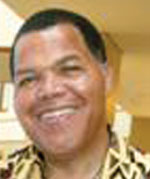
BL: Well, the change of heart has come through the majority of the people because you had an election from the majority of the people that made it possible for Barack to be elected. You are always going to have elements in the community in our country that hold fast to some of their old attitudes and traditions. And basically it is a product of their fears that they have. And that fear comes from a lack of information, knowledge and exposure and interpretation of their experiences. So we see this kind of attitude coming forth and people being very negative, showing forth their ugliness, but it does not prevail. That’s the main thing, its not predominant.
MC: Is it justified for Black leaders to criticize President Obama given his relatively short period in office so far?
BL: Yes. I think that if people feel the necessity of giving their critical evaluation and remarks, that’s part of our freedom of speech. We should not silence people and say because of their particular ethnicity, they should not express their true criticism. That also represents the kind of change that we are talking about. Too many people are at war with each other over some superficial identification such as tribal and religious which really are not essential to the issues we are talking about. But they hide behind those kind of cloaks in other to justify their attacks on people. Unfortunately, that is the case. The fact that Blacks can criticize other Blacks then says we have come to another level.
MC: Given the recent criticisms mounted against President Obama by Congressman John Conyers Jr. on the healthcare issue, should he (Obama) expect criticism from Black leaders?
BL: From the very beginning including with his (former) pastor, (Rev. Jeremiah Wright) Obama has been criticized by Blacks. The civil rights leaders, for example, Jesse Jackson Jr., Andrew Young and John Lewis, some of the dominant figures in our history who worked with Martin Luther King Jr. and helped to bring about changes, were also some of the outspoken critics of Obama when he was running for president. So this is nothing new for him, the fact that people are able to express their opinions. Personally I was always in favor of Barack Obama because I like the style, the demeanor; he displayed the kind of philosophy that I saw in Martin, the way you respond to your critics. His public approach would approximate King more than any of the others.
MC: If King where alive today what would he say about the Obama presidency?
BL: I think he would be very proud of what has happened and he would be very happy. I think he would be happy because here is an individual, a fellow American who is concerned about the conditions of poor people. But more importantly, King in his last campaign, the Poor People’s Campaign, put the burden and responsibility of changing the conditions of poor people on the government. Not a political party, not an individual but the government should be responsible for making sure that every person would have an opportunity to have a good-paying job and be able to take care of their family members and their communities. So the fact that Barack is a person of color, a Black man, would be an additional asset which, really reflects the change that is taking place in our country. But King would be proud if he had been a White man, Native American or Hispanic or Asian. That’s what he was fighting for — for people to be accepted regardless of their ethnicity. But King would also have been in favor of those who want to criticize and have a debate about these issues.
MC: So King would have railed against the war in Iraq and Afghanistan where the president is sending troops?
BL: He would have criticized that because King did not believe that violence is a way of trying to solve problems. That would be the issue, not whether he was Black, White or whatever. Violence begets violence. King felt that was not the way to get reconciliation of these kinds of problems.
MC: In his Nobel Prize acceptance speech in Oslo, Norway, President Obama laid the groundwork for a justified war. In King’s Nobel Prize acceptance speech, he paid a glowing tribute to the fight for racial and economic equality. King was against the war in Vietnam. How do you compare these two?
BL: Yes, King believed that in certain situations that it could be necessary when
there was a formidable force that threatens to destroy people, like genocide for example. There should be an intervening force that should stop that. But then we should regroup and teach people the nonviolence way of solving problems. But King was not one of those who believed that you do nothing in the face of destruction of other people. That would be the lesser evil to use force to stop that. So he was certainly against what Hitler was doing to the Jews and other people in World War II and he believed that we should intervene. He did not believe that the process of war would lead to peace but it was a stop gap for all of us to make peace. Sometimes we have to stop war.
About Post Author
