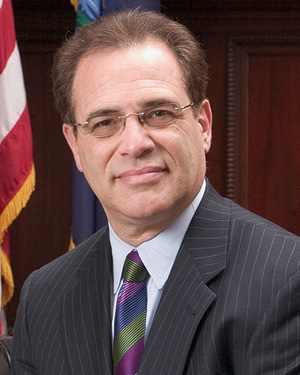
 In a wide ranging interview with the Michigan Chronicle, embattled Wayne County Executive Robert A. Ficano took responsibility for the troubles of the county that saw some of his top lieutenants headed to jail and others waiting for sentencing or their day in court.
With major financial issues continuing to face the bankrupt and emergency manager-run city of Detroit, which is the county’s largest municipality, Ficano insisted that, overall, Wayne County is stable.
Discussing an array of issues as they relate to the nation’s 18th most populous county, the Wayne County CEO wouldn’t give in to critics who say the county is in financial limbo.
“First of all, Wayne County is very stable,” said Ficano. “More than perhaps what many people perceive, especially from an economic standpoint of what we’ve been able to drive.”
Economical and statistically speaking, according to Ficano, Wayne County, since 2009, has led the state of Michigan in attracting 43 percent of new investment and 38 percent of all new jobs created in the state. He also stated that since fiscal year 2012, the county has attracted more than $1.3 billion in new investments. He touted how Wayne County’s EDGE (Economic Development Growth Engine) has offered economic incentives and partnered with the state and local governments to attract much of this new investment, such as the upgrades and expansions of the Wayne Ford Assembly Plant.
“We had a hand in a lot of that, in terms of helping,” said Ficano, who is seeking re-election. “In the auto industry, we went ahead and did a lot of the tax incentives that helped bring more than a thousand jobs from Mexico to the Wayne Ford Assembly Plant. We were instrumental in some of the tax incentives for the Poletown Plant and the additional shifts that came on over there. Also, we brought Magna Seating into Highland Park.”
While there have been economic upticks in Wayne County over the past few years, the county has experienced more than its share of fiscal downturns, particularly due to the severe reduction in collecting county property taxes.
“In 2009, we had an $18 million surplus. What happened was in 2009, when the devaluation came, we lost $100 million initiatively that year. We’ve lost about $345 million accumulated in tax revenue that would normally come into the county that we didn’t have,” he said, adding,
“We’ve done all the traditionally cuts. I cut my salary 10 percent for the last five years. All at-will employees have been cut 10 percent for the last five years as well. The workforce has been cut over 1,500 people, I believe.”
Ficano also pointed to the recent approval of the $175 million Deficit Elimination Plan (DEP) by the Wayne County Commission, which first garnered conditional approval by the Michigan Treasurer’s Office.
“We accomplished a lot through hard work and negotiations,” Ficano said. “This is a major step forward in putting the county’s finances on solid ground. We have spent the past three months in meetings and working with the County Commission and all of the plan’s stakeholders and we’re glad to see it move forward. We want to help ensure that Wayne County doesn’t become the next Detroit with an emergency manager running our government.”
The plan outlines steps to resolve the $175 million accumulated deficit and remedies for a structural, operating deficit of approximately $31 million a year. Key elements for eliminating the accumulated deficit, according to Ficano, include reallocating $81 million of county funds now accounted for in the County Treasurer’s offices and reorganizing and transferring the county’s Downriver wastewater treatment facilities to an authority. The structural deficit is addressed through a host of solutions that, when combined, will allow the county to realize a net surplus in fiscal year 2015.
For Ficano, the creation of jobs is still paramount to the growth of Detroit and Wayne County as a whole.
“We have to create more jobs,” he said. “To me, jobs create more self-respect, confidence and habits that are passed on from one generation to another. Having a job is a spring-well to other things that touch and benefit our community. With jobs, people are more willing to take on issues of improving schools and other issues.”
Ficano also responded to the state of trust in his office, following a series of accusations against appointees leading up to indictments and jail sentences of top county officials who breached the trust of Wayne County residents.
“If somebody did something wrong, they should pay for it,” said Ficano. “I take some responsibility because the buck stops with me if someone under me does something wrong. At the same time, sometimes you trust people and they let you down. It happens in life all the time. I think what you saw is that the two people that ran into problems in my administration are gone, I was able to cut the cord very easily because nothing was attached to me.”
Ficano said measures have been put in place that will help prevent many similar type things from happening again, such as the implementation of a new Executive Ethics Policy and creation of an Ethics Board. Ficano was asked to explain the status of the partially built Wayne County Jail, since downtown construction has come to a grinding halt.
“AECOM, the project manager, has built jails all over the world; this wasn’t their first rodeo,” said Ficano. “After we spent about $100 million, they came and said that it’s going to cost more to build the jail. They came back 42 times with unauthorized changes to the work orders, so I stopped the project and we are suing them.”
The lawsuit, according to Ficano, charges that AECOM, who agreed to a $220 million guaranteed maximum construction price, failed to keep contractual obligations, which has led to about $50 million in cost overruns.”
Moving forward, Ficano said he is “committed and energized to finish the jail project (Mound Road facility is an option), implement the Deficit Elimination Plan, and continue other initiatives that will make Wayne County the “comeback county” in the state.
About Post Author
