


The City of Detroit and its community partners revealed today how tenants of rental properties affected financially by the COVID-19 crisis and behind in their rent can now apply to receive up to 12 months of rental assistance, according to a press release.
The assistance is possible due to a new $50 million fund approved for Detroit last week in Lansing. The COVID-19 Emergency Rental Assistance (CERA) program is designed to keep these Detroit residents in their homes by providing funding to get current on their payments, as well as legal assistance if they are facing eviction, the release added.
To qualify, the household must earn no more than 80% of the area median income (AMI). A Detroit household of one person earning less than $44,000, or a household of four people earning less than $62,800, would qualify. Applicants also must be able to demonstrate financial hardship due to COVID, such as having received unemployment, had their income reduced or incurred added expenses.
Unlike previous assistance funding, a tenant does not have to have been served with an eviction notice to qualify, the release added.
The following income-qualifying individuals are eligible:
- Renters with a court order summons, complaint, or judgment against them.
- Renters who are behind on rent and/or utilities and have a past due notice.
- Landlords with tenants who are behind in rent.
The funding is now available by applying through www.detroitevictionhelp.com or calling the Detroit Eviction Helpline at 866-313-2520, 8 a.m. until 6 p.m. Monday-Friday and 9 a.m. until noon Saturday. The City’s nonprofit partners already have begun working through a waiting list of people who applied but did not receive rental aid in the first round. Renters or landlords can apply to the program, but each must provide supporting documentation.
- Up to 50% AMI (see AMI chart on page 3): up to 12 months of rental assistance
- 50%-80% AMI: up to 10 months of rental assistance
- Tenants may apply for an additional three months of rental assistance, if necessary, for housing stability.
“With the federal moratorium on evictions lifting at the end of this month, we need to keep every Detroiter in their home, and now, more help is available,” said Mayor Mike Duggan in the release. “I would like to thank the governor and our nonprofit partners for stepping up to help protect Detroiters from being evicted and helping to ensure that they emerge from this pandemic with the security of knowing they are not at risk of being pushed out of their homes.”
The program is funded by the U.S. Department of the Treasury and administered by the Michigan State Housing and Development Authority. The City of Detroit has in turn partnered with local nonprofit agencies for implementation: the Homeless Action Network of Detroit (HAND); United Community Housing Coalition; Wayne Metropolitan Community Action Agency (Wayne Metro); MI Legal Services, Lakeshore Legal Aid, and The Heat and Warmth Fund (THAW).
So far, the Michigan Legislature has sent $50 million out of $96 million appropriated for Detroit as part of a COVID-19 relief bill that Congress passed in December. The remainder of the funds is expected soon, as deadlines require that the State distribute the rental aid or risk having to return it to the federal government. Once Detroit receives the remainder, it will be funneled into the existing program.
“The City of Detroit and our nonprofit partners are standing by and ready to help Detroiters get through this crisis,” said Julie Schneider, acting director of HRD. “Because most Detroit households will qualify, even residents who are unsure whether they meet the income threshold are encouraged to apply. We’d rather them be safe than sorry by missing out on the financial assistance available.”
“The current housing crisis that we are faced with requires commitment at all levels, which makes the partnership with the City and various nonprofits essential,” said Tasha Gray, executive director of HAND. “As an organization founded to provide leadership to end homelessness, we are dedicated to being a part of the solution to keep Detroiters in their housing. The CERA program is a piece of that solution.”
The program also requires that for the landlord to receive the entire past due funds they are owed, the property must be free from imminent threats to health and safety. Examples include holes in the roof, lack of hot water or heat, sewage backups, vermin or black mold. Up to 50% of the amount approved for payment of past due rent may be released to the landlord if funds are needed for the repair.
“Landlords have been significantly impacted by missing rent revenue while they still have mortgages to pay, so I have some sympathy for them,” said Duggan. “But if the health or safety of their tenants is at risk, making repairs has to be their first priority.”
Detroit households may be eligible for the CERA program if they meet the following criteria:
- Your household must have experienced eligible COVID-19-related financial hardship since March 13, 2020. Qualifying examples include:
- A member of the household has qualified for unemployment.
- A member of the household has had at least a 10% reduction in income.
- A member of the household has incurred significant costs of more than $500.
- The household can demonstrate a risk of experiencing homelessness or housing instability evidenced by a past due notice for utilities or rent.
- Household income is below 80% area median income (AMI). (See chart below.)
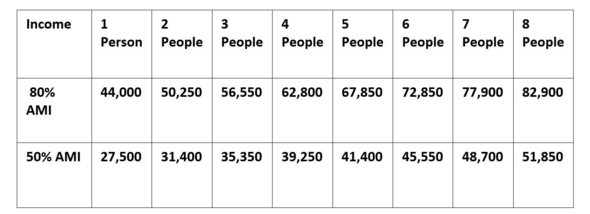

Utility assistance is also available for the first time, to ensure Detroiters don’t have utilities shut off:
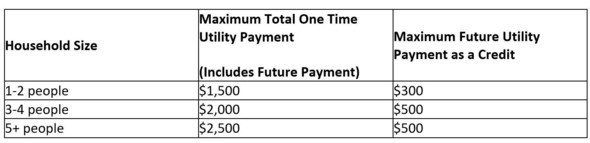

Tenants earning up to 50% AMI are eligible for an additional $500 if needed to fully pay utility arrears.