


The New York Times in its Feb. 14 edition confirmed what many have long believed to be the modus operandi of the Congressional Black Caucus. That this historic organization, that once garnered respect and clout among Washington powerbrokers, has dwindled into a social abyss through its actions, including sleeping with strange bedfellows. Which does little or nothing for their Black constituents.
Some of my Nubian brothers and sisters who want to live in perpetual denial will quickly dismiss an exposé by the Times as a mere racializing media assault on a notable Black congressional group.
Others might be questioning what audacity the Times has in delving so deep into the dark sides or the underbelly of the Congressional Black Caucus when there may be other White organizations that are equally guilty of the same unethical and contradictory practices as the CBC.
But I am not interested in the application of race to defend the indefensible and allow mediocrity, incompetence and hypocrisy to thrive at the expense of millions of African Americans who are waitint on the CBC to deliver.
I do not run an enterprise called “Racism Incorporated: How Much Can You Pay?” that will find grounds to justify the inexcusable behavior of the CBC, which claims to be fiercely fighting for the economic, political and social liberation of African Americans in Congress.
Yes, there is mounting evidence that Black organizations do not get the same fair treatment as their White counterparts by the mainstream media.
But in this instance let us allow the facts to bare themselves as far as the self-inflicted troubles of the CBC are concerned.
In an article titled “In Black Caucus, a Fund-Raising Powerhouse,” the Times revealed that from 2004 to 2008, the CBC took in at least $55 million in corporate and union contributions through its various political and charity apparatus or non-profit groups.
Out of that staggering amount, only $1 million went to the CBC political action committee.
When the CBC was approached, officials justified the fundraising by saying the non-profits exist to help “disadvantaged African Americans by providing scholarships and internships to students, researching policy and holding seminars on topics like healthy living.”
Interesting.
How many Detroit students are on a CBC scholarship?

On healthy living, one would assume that also encompasses the healthcare debate where members do not only have to state their positions through press releases but also by creating talk sessions among constituent groups to take a firm stand on the healthcare debate.
Where was the CBC when the GOP and their right wing machine successfully carried out mob-like town hall meetings to disrupt the facts and tried to strain the debate on health reform?
Did the CBC conduct a full force nationwide healthcare tour of cities that are heavily concentrated with African Americans to engage our communities on the facts and benefits of a health reform?
In the article, the Times reported that the CBC is in bed with “cigarette companies, Internet poker operators, beer brewers and the rent-to-own industry, which has become a particular focus of consumer advocates for its practice of charging high monthly fees for appliances, televisions and computers.”
Meanwhile, the CBC in 2008 spent roughly $700,000 for its much-publicized legislative conference, the high point of which is the dinner attended by thousands more than it spent on scholarships for Black children.
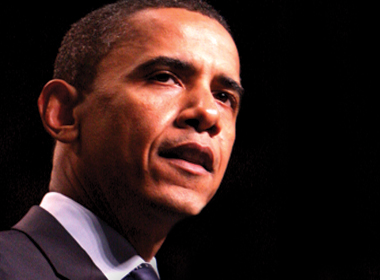
Last year’s function was keynoted by President Obama, himself a former but non-active member of the group.
Because of the massive support CBC receives from companies whose business practices and ethics are most of the time diametrically opposed to the well-being of African Americans, the members are struggling to walk a fine line that a third grader can see as very blurred.
Of note in the damning CBC story is the love relationship between rent-to-own companies that prey on the financially illiterate and low-income earners — Blacks in particular — and CBC members.
An article in the New York Daily News last year where Sen. Chuck Schumer called rent-to-own companies “one of the most despicable industries around,” showed how poor people are being slaughtered on the alter of financial greed.
“Schumer’s staff found that a $37-inch television which was being offered at Rent-A-Center for 104 weekly rental payments of $31.99 each — a total of $3,326.96. That same model could be purchased outright at Best Buy for $850,” the New York Daily News reported.
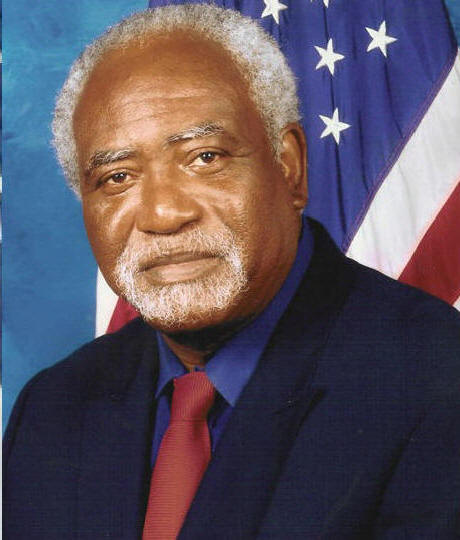
So CBC member Congressman Danny K. Davis from Illinois supported legislation that would have strictly undercut the rent-to-own industry thriving in urban centers, including his own Chicago west side district, but later backed off from his opposition according to the Times article.
Instead, Davis co-sponsored legislation, supported by the industry after a financially oiled campaign to win the CBC, and a promise to donate computers to a jobs program named after Davis.
Larry Carrico, former head of the rent-to-own trade association traveled to Chicago to hand over to Mr. Davis his well deserved gift for supporting an industry that rips off the Black community: a van with “Congressman Danny K. Davis Job Training Program” on it.
Another example of CBC members hustling for their own selfish gains, which may be based on the fact that the majority of Blacks who elect them don’t have the money to buy their influence in Congress, is Congressman William Lacy Clay Jr. of Missouri.
He received $14,000 from the rent-to-own industry in 2008 for a golf tournament his family organizes in St. Louis.
“I will always do my best to protect what really matters to you,” the Times quoted Clay as telling the industry after it agreed to hold its 2008 convention in St. Louis, his district.
Apparently, Clay forgot who sent him to Congress. There is no sense of recourse to the actions of some of these lawmakers who are willing to deal and negotiate their Congressional seats and trade their influence at the expense of their district members.
No wonder most of their Congressional districts remain so poor and disadvantaged. The members have shown no decency in their dealings with companies preying heavily on their constituents.

Other major companies like Peabody Energy aided in drafting a report in the name of the CBC that contained their positions.
In one instance the CBC issued a policy statement through its so-called Black Caucus Institute contending that the government should consider the financial impact of climate change legislation before it is passed, which is a familiar energy industry position, according to the Times.
It is paradoxical to observe how members of the Congressional Black Caucus have been unrelenting in their criticism of President Obama, demanding specifically targeted stimulus packages for Black communities. At the same time this very group is wining an
d dining with companies that only exist to rip off Blacks and other low-income communities.
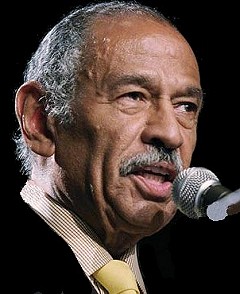
It is noteworthy that this group is so quick to take Obama to task on the stimulus package when many of its members straddled the fence in endorsing the Obama presidency until they were called out for their lack of a political backbone. (With the notable exception of Congressman John Conyers, the first major lawmaker to support Obama.) Beholden to the past Bill Clinton administration, the majority of the caucus expected Hillary Clinton to win, because the CBC in many capacities has served in the past as a buffer to Democratic administrations, defending and explaining policies that were sometimes unjustifiable to the survival of African Americans.
The CBC, sadly, today serves as one of the biggest defenders of industries that are holding Blacks economically hostage because of deliberate and unfair trade practices these groups are allowed to conduct in CBC member districts. When we consider the founding of the CBC, the irony of history is even more nerve-racking, sinister and scary.
When confronted by the Times, CBC chair Barbara Lee of California repeated a refrain that “We’re unbossed and unbought,” a political line that originated from the venerable Shirley Chisholm, the first African-American woman in Congress and the first to run for president in 1972.
The immediate past head of the CBC is Congresswoman Carolyn Cheeks Kilpatrick of Detroit.
Lee perhaps was striking the emotional chord by using a very familiar phrase that ignites the sensibilities of African Americans as far the struggle for liberation is concerned.
Instead of answering to the facts in the article, Lee reminded the Times that, “Historically, we’ve been known as the conscience of Congress, and we’re the ones bringing up issues that go unnoticed or just aren’t on the table.”
What are you known for today?
Leaders like Lee and some of her colleagues understand that African Americans respond very well to the gallery of emotional politics. Therefore it makes sense not to answer to the serious charges of derecliction of duty but, instead, play the usual emotional politics.
For too long the masses of Blacks have accepted surface appeal from political leaders who have done little or nothing to improve the conditions of those in the inner cities. This attitude towards public service is not helping to liberate Blacks from the shackles of financial slavery.
If those who should protect the interest of Blacks are supposedly in cahoots with those who are perpetrating the crimes, there is no protection.
It is time for those dutiful lawmakers within the CBC to wake up to the tricks of the CBC leadership. Not all members of the caucus are in line with this way of doing business. Therefore, those within the ranks of the CBC who value conscience, integrity and dignity in fighting the cause of their constituents shoud demand a change.
Watch senior editor Bankole Thompson’s weekly show, “Center Stage,” on WADL TV 38, Saturdays at 1 p.m. This Saturday’s program, Feb. 20, will feature an in-depth conversation around the challenges facing Black men. E-mail bthompson@michronicle.com.