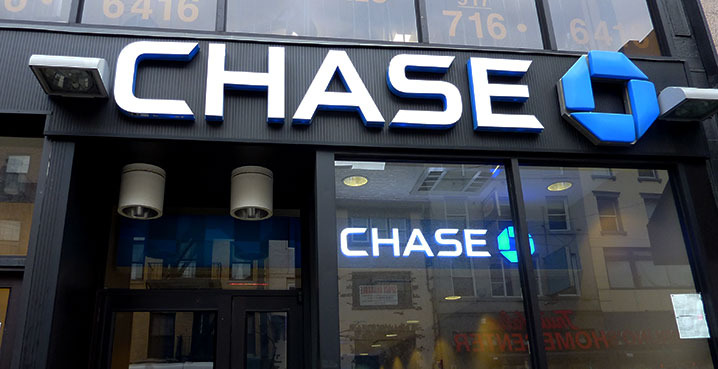
Almost everyone seems to be jumping for joy at the announcement today of a $100 million commitment over the next five years to revitalization efforts in Detroit by JPMorgan Chase.
But the reality is that Chase Bank was one of the major participants in the 2008 mortgage scandal that rendered many homeless, destroyed families and leaving investors with no money. As a result, America’s largest bank, with 2.4 trillion dollars in assets, was forced to settle with the federal government at the tune of $13 billion. That mortgage crisis distressed a lot of homeowners in Detroit and other urban centers across the country.
Bear Sterns, the investment bank that was bought by Chase with $29 billion loan from the Federal Reserve (taxpayer money), was one of the principal culprits in the mortgage crisis, forcing New York Attorney General Eric Schneiderman to bring a massive lawsuit backed by the federal government against Chase, accusing them of fraudulent deals in billions in residential mortgage-backed securities.
Also, Washington Mutual, purchased by Chase like Bear Sterns, was accused of selling risky mortgage securities during the housing boom and misrepresenting the quality of those mortgage securities, which the federal government said was central to the economic crisis.
“Without a doubt, the conduct uncovered in this investigation helped sow the seeds of the mortgage meltdown,” U.S. Attorney General Eric Holder said after a settlement was reached. As part of the agreement with the Justice Department, JPMorgan admitted to making “serious misrepresentations,” to its investors, according to the DOJ.
So when JPMorgan makes the grand announcement in Detroit today it is important to look at this news in the context of some sort of public atonement for what Detroiters went through during the mortgage crisis.
No matter what happened in Detroit, the mortgage crisis also contributed to the city’s economic decline, forcing people to not only flee their homes but also flee the city. That is a narrative that we can’t erase in the city’s comeback story and we should not pretend that it didn’t exist.
Michigan United, an advocacy group, released the study “Wasted Wealth: The Foreclosure Epidemic, A Generational Crisis for Communities of Color,” underscoring how the group said Detroit lost $1.3 billion of wealth to the foreclosure crisis in 2012 alone.
The Congressional Black Caucus Foundation in Washington, D.C. came to Detroit to hold a special town hall at the Charles H. Wright Museum of African American History at the time, which I moderated featuring national experts on the mortgage crisis discussing how communities of color suffered and lost wealth in the mortgage scandal.
So when NBC “Today” show host Matt Lauer pointedly asked Jamie Dimon, chairman and CEO of JPMorgan Chase, if the economic goodwill gesture for Detroit was a public relations move to put the bank in good light, especially after what happened during the mortgage crisis, the banker dismissed the question.
“That would be wrong. We invest in the development of communities around the world and we’ve been doing it for 200 years. Banks do this commercially. We’ve got our people, our money and our philanthropy, but mostly we invest to grow a city,” Dimon told Lauer.
Dimon could have simply acknowledged the role the bank played in the mortgage crisis reflected in the agreement it had with the Justice Department, and then talk about Detroit coming back from the mortgage crisis. Because the 2008 economic crisis is still fresh on the minds of people — the majority of whom were devastated by that crisis and are still looking to regain their own dream of homeownership.
I’m not suggesting that the announcement isn’t worthy of our commendation or praise. It is significant in light of what the city is going through during this bankruptcy period and at a time when a new government at city hall is striving to make a mark on Detroit’s revitalization. Detroit needs all of the investments it can get.
However, it is important to note that while this gesture from Chase Bank is seen as crucial to the city’s ongoing development as city leaders are hailing it, we cannot divorce an important chapter — the recent mortgage crisis that contributed to where Detroit is today of which the bank was a part.
So I appreciate what Chase Bank is going to do in the city over the next five years. It’s good to know that Detroit’s own Dan Gilbert was a catalyst for this effort because the Quicken Loans founder is sincere about his commitment to the city, something he has conveyed to me several times. He is almost singlehandedly trumpeting Detroit in ways that it never has been before. He’s heavily invested in the city.
But maybe this may be a wake up call for other institutions that are not strongly involved in Detroit to also find a niche to make a difference in this city.
Recently, Matt Elliott, president of Bank of America in Michigan, and two of his top executives walked into my office to discuss an interest in being fully engaged in Detroit’s regeneration. Among other things, we talked about corporate social responsibility being beyond just a nice gesture or a gift, but rather a meaningful act to change and to positively affect lives leading to social transformation.
Corporate social responsibility should go beyond just sponsoring a banquet or dinner. It is more than writing a $5000 dollar check to have your name mentioned at an event.
Rather, it should mean actively taking part and contributing to making lives better in the communities in which some of these institutions operate.
Already Detroit has several companies and organizations that are doing just that without the big splash. But if it takes an announcement like that of Chase to move others, whose fingerprints are absent or barely present on Detroit’s economic landscape, to now act in goodwill, and out of a crucial need to make a difference, I welcome that.
Bankole Thompson is the editor of the Michigan Chronicle and author of a forthcoming book on Detroit. His most recent book, “Obama and Christian Loyalty,” deals with the politics of the religious right, Black theology and the president’s faith posture across a myriad of issues with an epilogue written by former White House spokesman Robert S. Weiner. He is a senior political analyst at WDET-101.9FM (Detroit Public Radio) and a member of the weekly “Obama Watch” Sunday roundtable on WLIB-1190AM New York. Email bthompson@michronicle.com or visit https://www.bankolethompson.com.
Bankole Thompson is a distinguished journalist, presidential author and editor of the Michigan Chronicle. Visit him at https://www.bankolethompson.com
About Post Author
